
Skip navigation

White Mountain Trip 2004

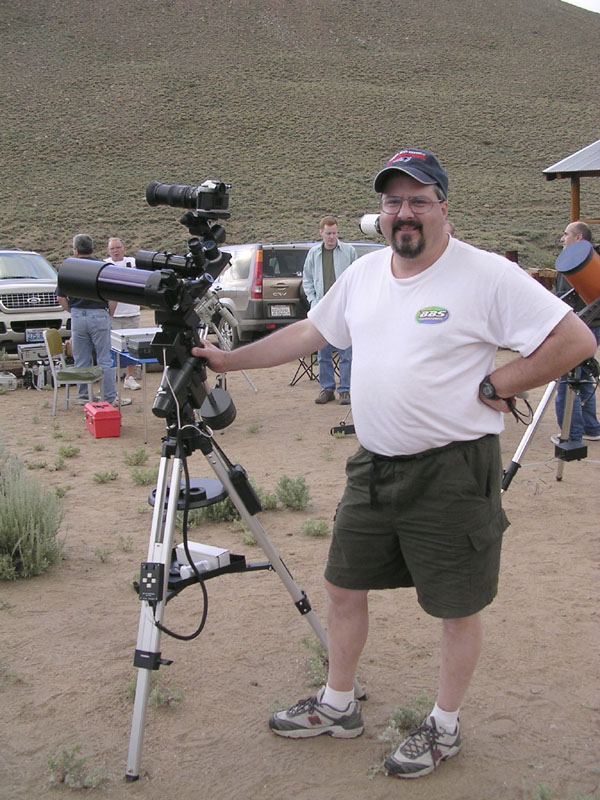
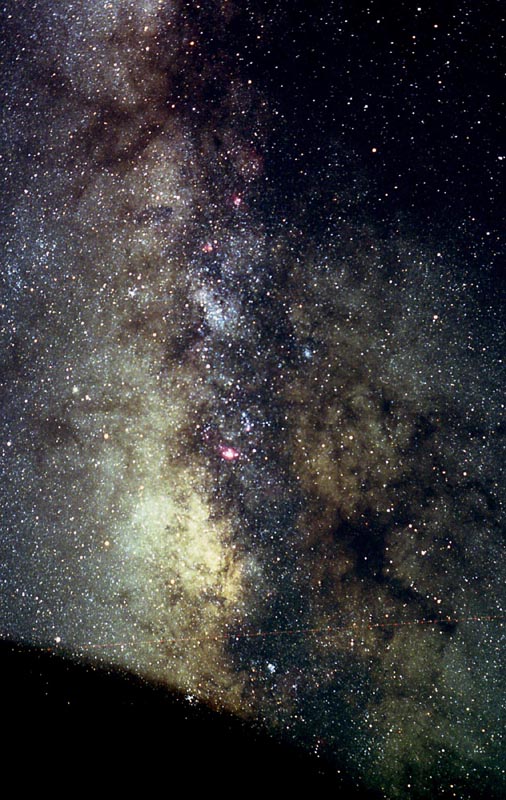
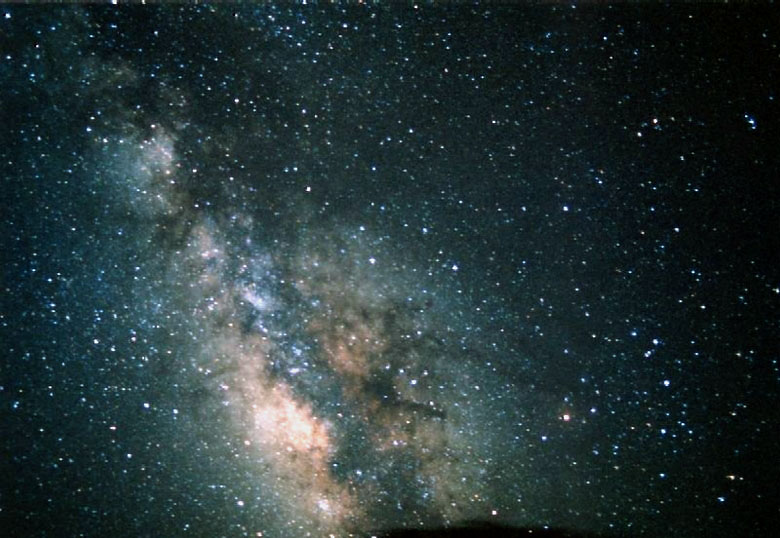
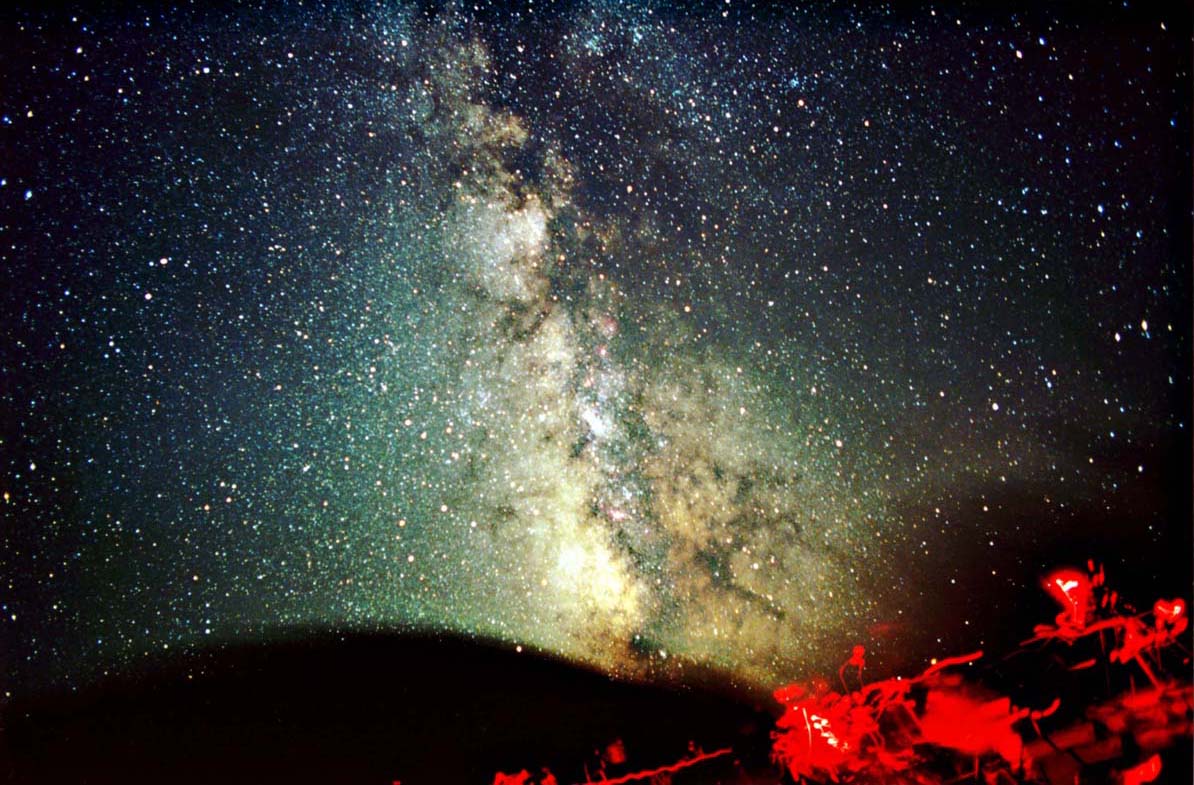
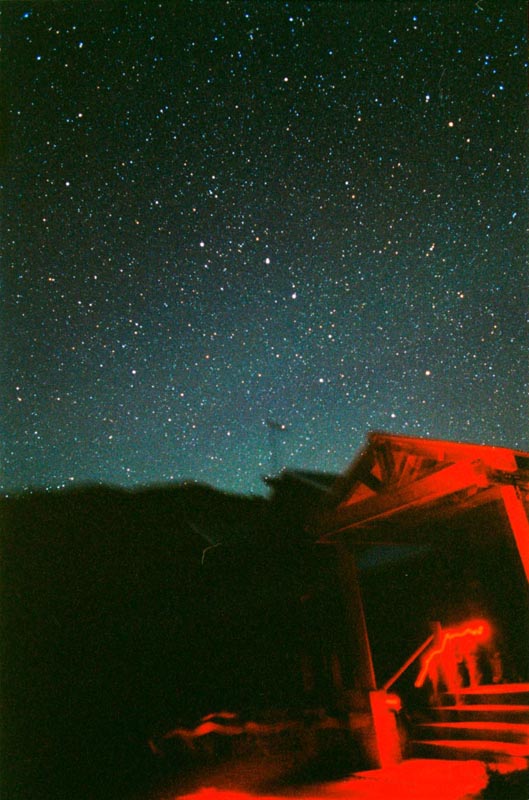
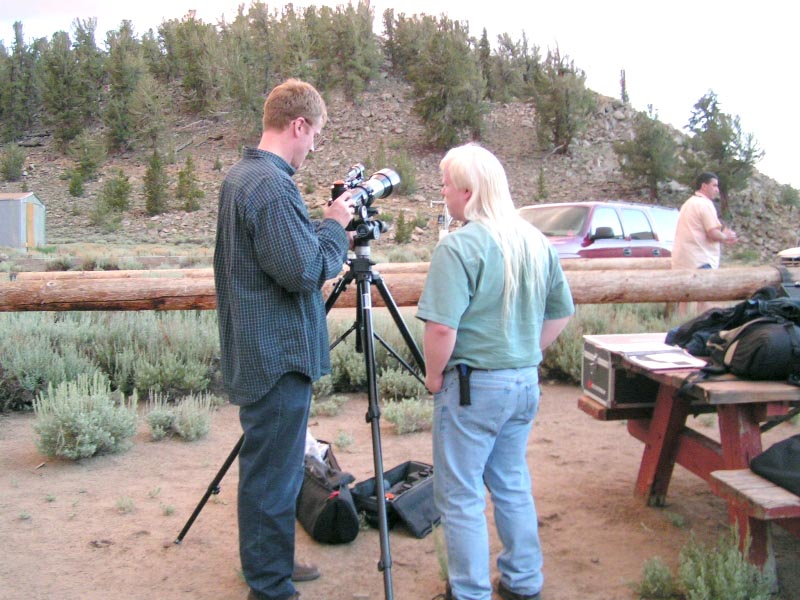
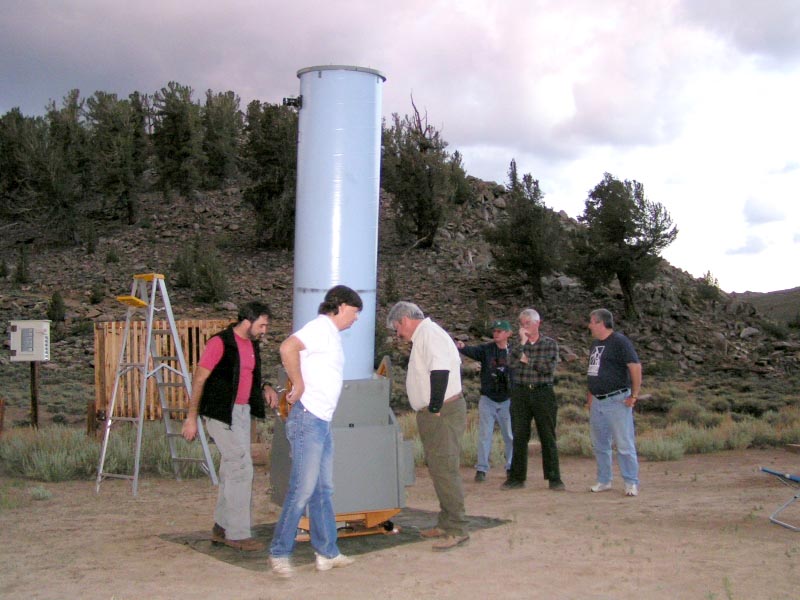
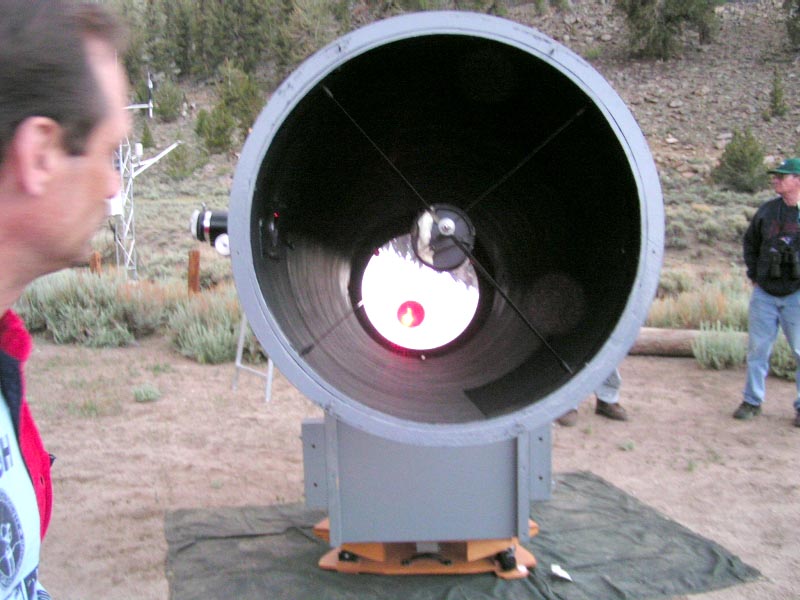
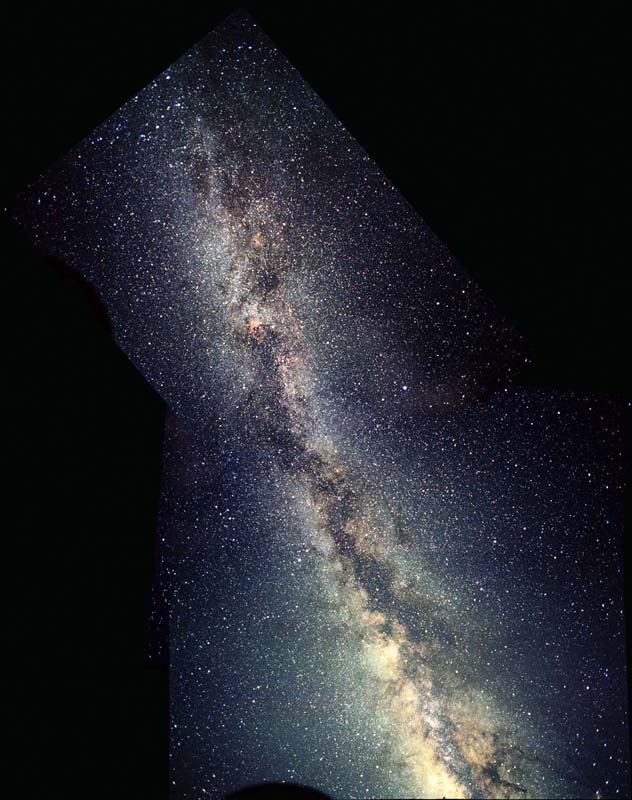
July was another busy month for Skyscrapers, starting with our annual cookout on July 10th that was very successful and well attended. I would like to thank Dolores and Ken Rinaldi, and Jack and Ileen Szelka for all of their help with the cookout this year. And then there was the trip to the University of California’s research center located at an elevation of 10,150 feet above sea level on the top of White Mountain. Twenty one intrepid Skyscrapers made the journey and met up with five of Al Hall’s friends at the research center, and we were all treated to some magnificent views through the telescopes they brought – a 5” Astro-Physics refractor, an 8” Celestron Cassegrain, and a 22” F5.6 Dobsonian. The filamentary detail in the Veil nebula was beyond belief in the 22” and it was also very easy to see the Veil in a pair of 10x50mm binoculars. Most observers were able to see the central star in the Ring Nebula winking in and out through the 22” Dob. Objects like the globular cluster M13 in Hercules, the spiral galaxy M33 in Triangulum, and the Lagoon Nebula M8 in Sagittarius were all naked eye objects under these very dark skies! The Milky Way stretched from horizon to horizon and offered up more detail than I’ve ever seen before! The weather cooperated on all three nights that we spent on the mountain.

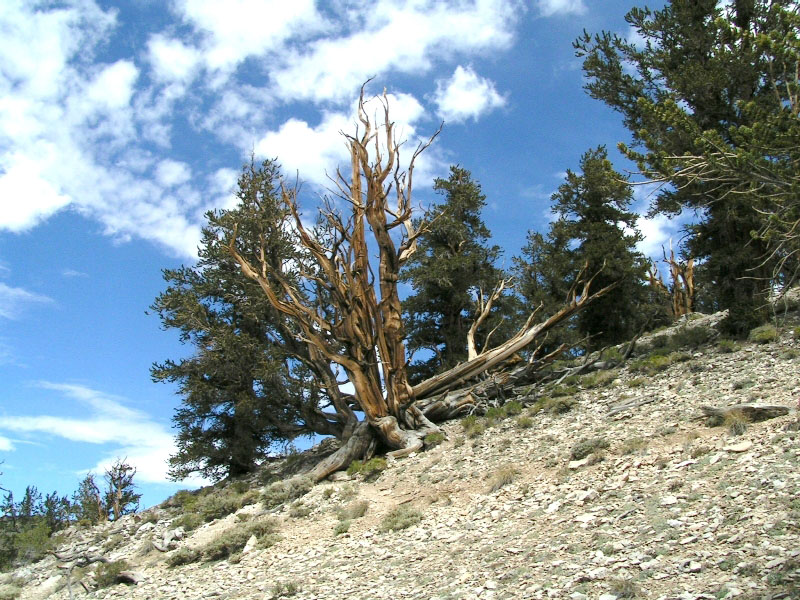
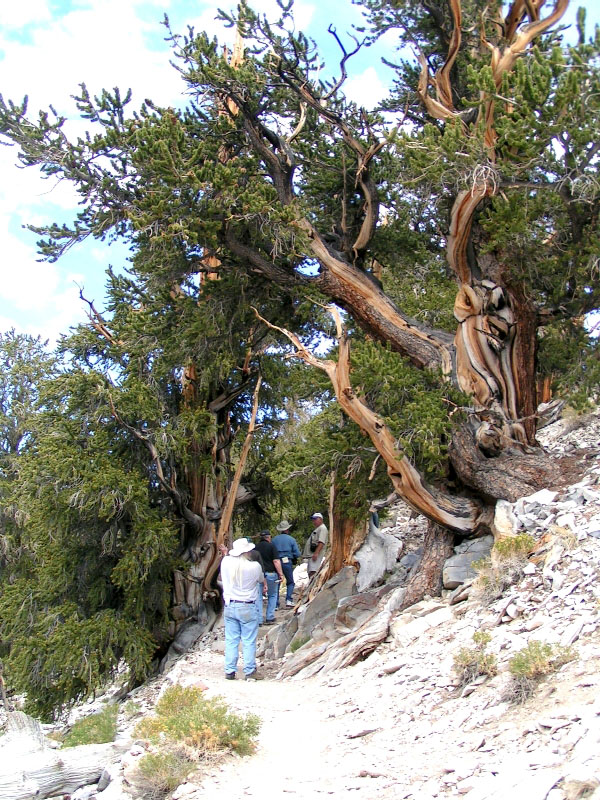
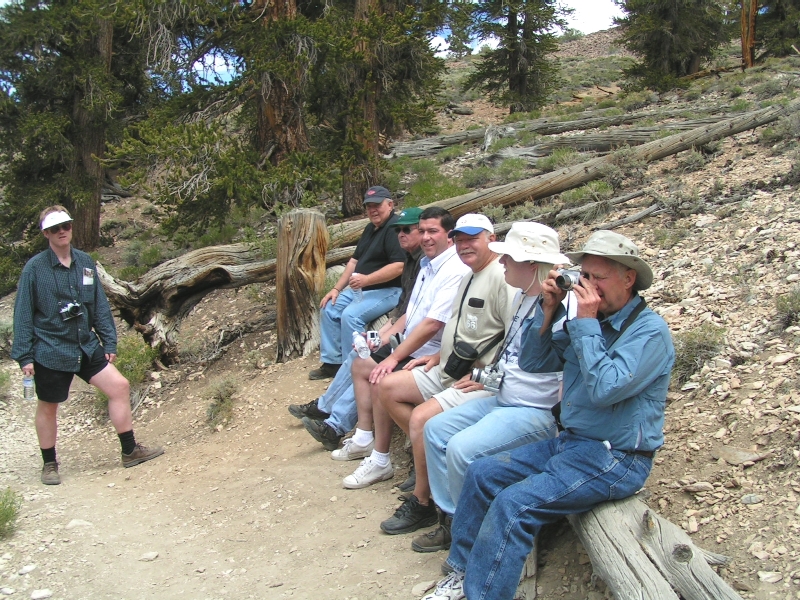
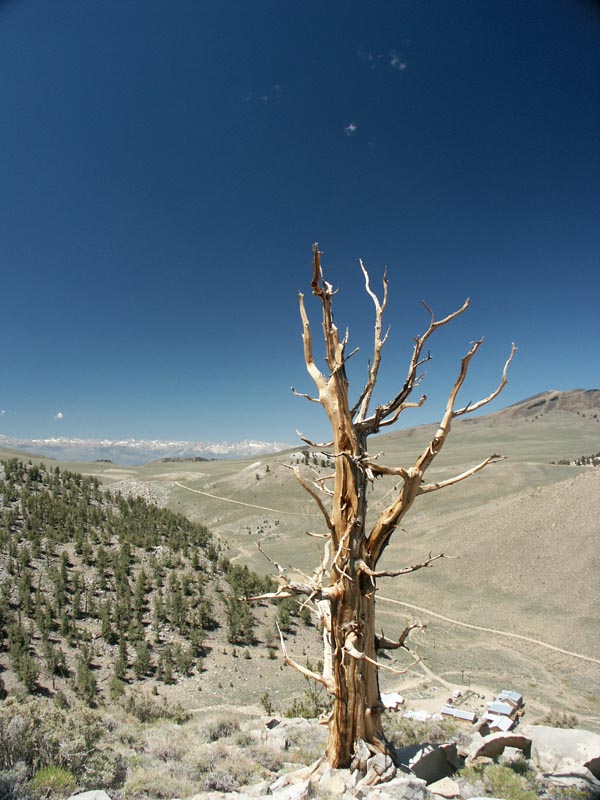
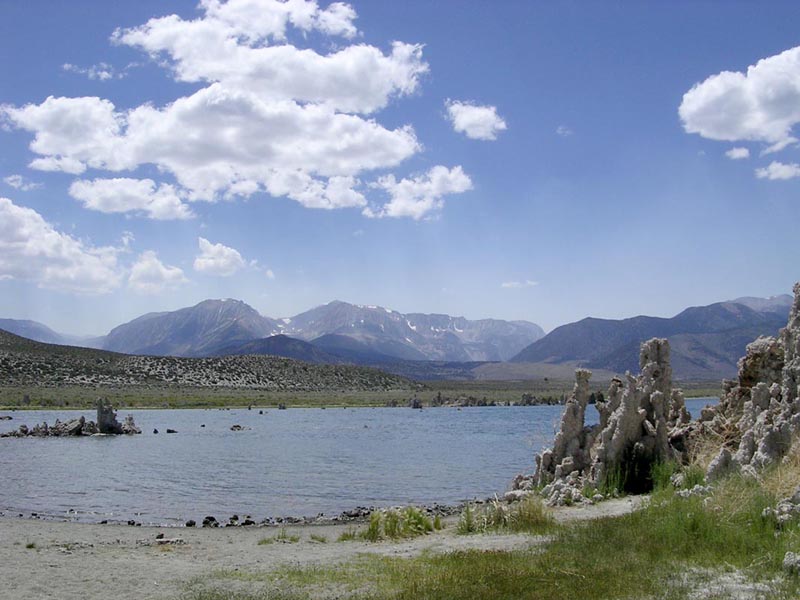
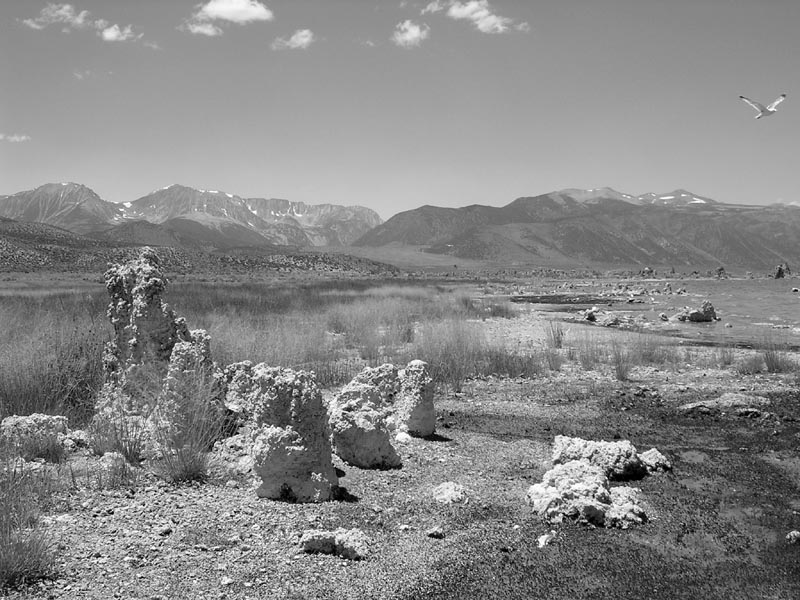
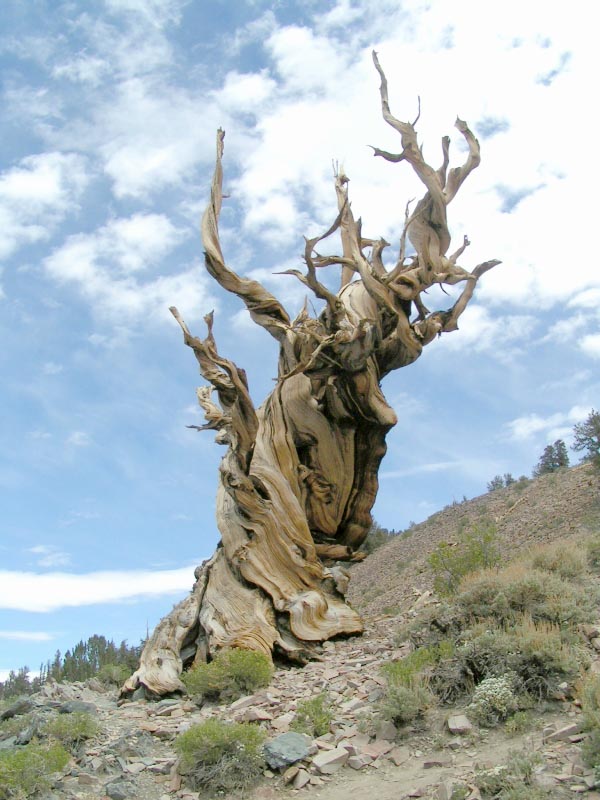
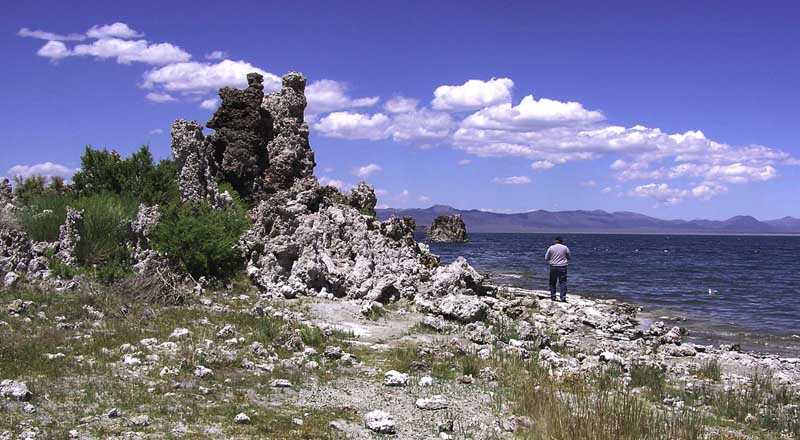
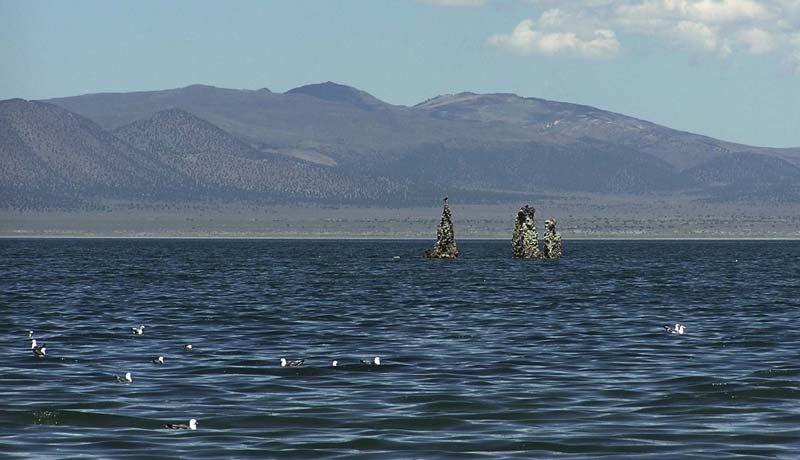
During the day there was time for some sightseeing, which included trips to the Ancient Bristlecone Pine Forest, which features the oldest living things on the Earth. Many of these trees are 4,000 years old and there is one, known as Methuselah that is over 5,000 years old! Mono Lake was another interesting destination spot, famous for its Tufa formations. Tufa forms under Mono Lake’s waters. When fresh water springs bubble up through the carbonate-rich lake water, the calcium and carbonates react to form a calcium carbonate salt deposit, which is called a Tufa. This solid, limestone-like material continues to develop, eventually forming vertical towers with spring water percolating up through and around them. Since the lake has been receding for years now, many of these features are visible along the lakeshore creating a very beautiful but alien landscape.

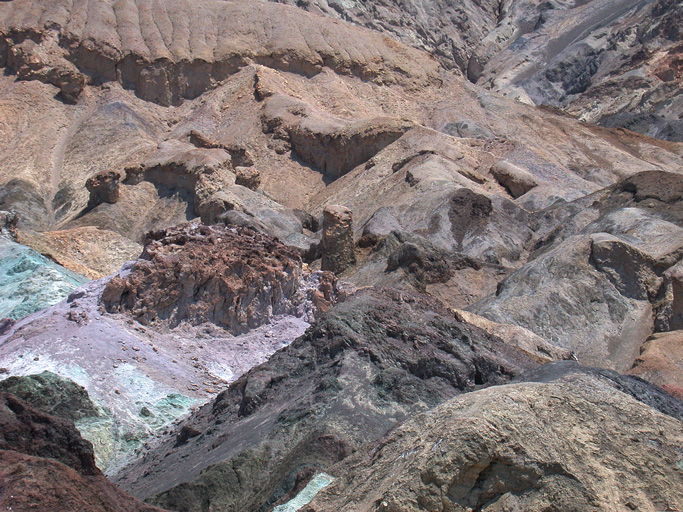
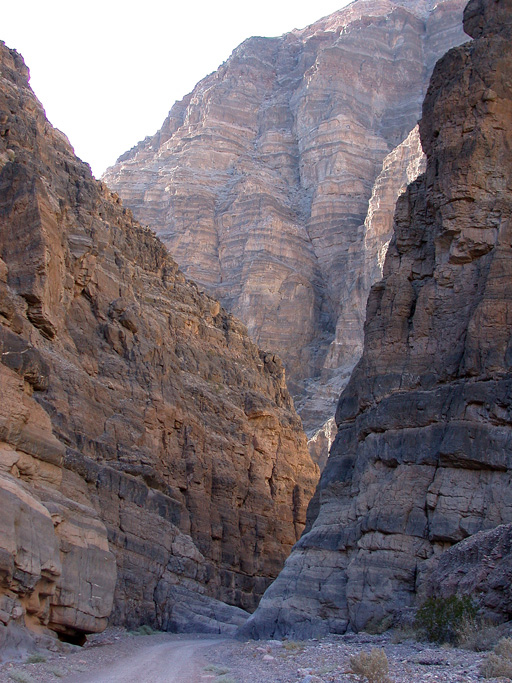
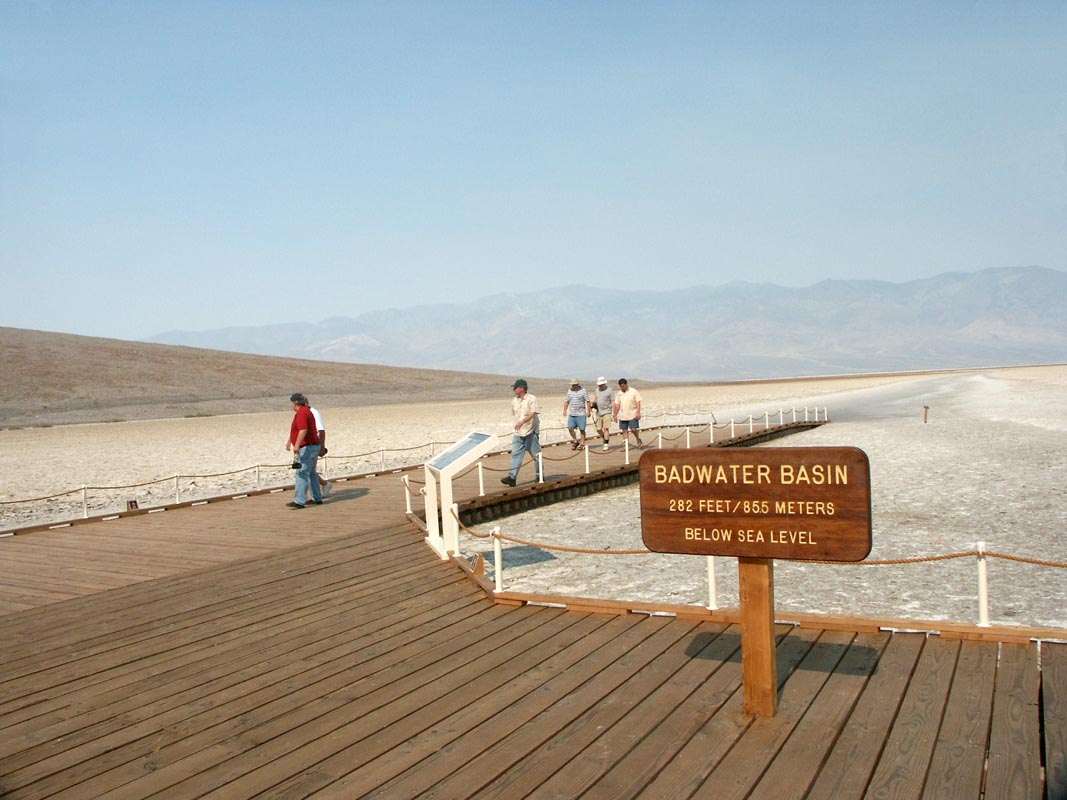
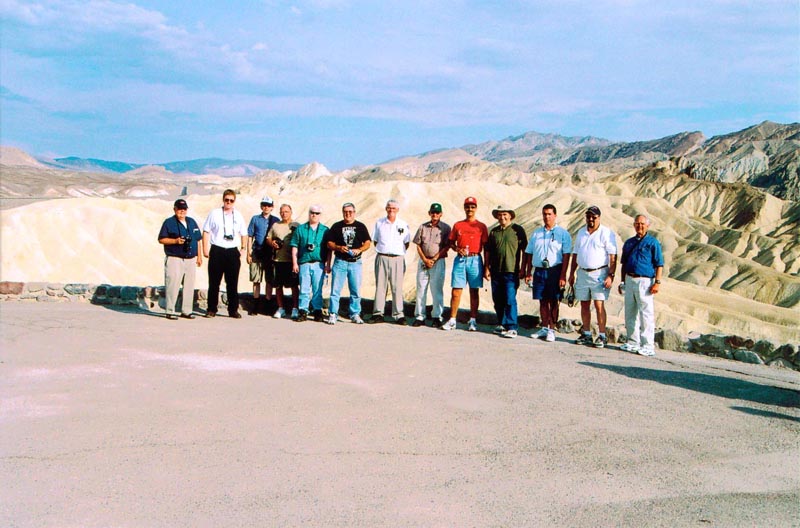
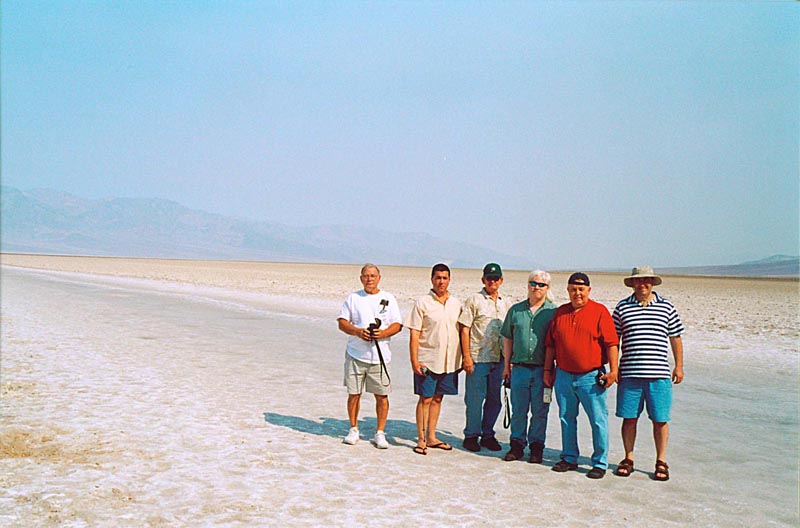
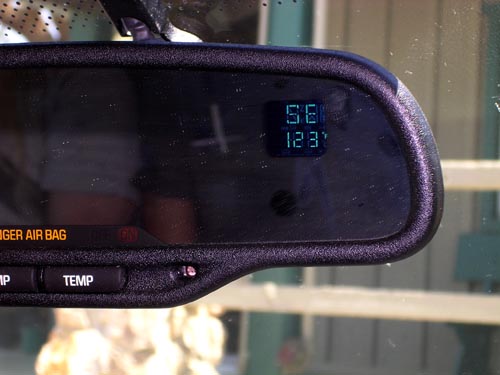
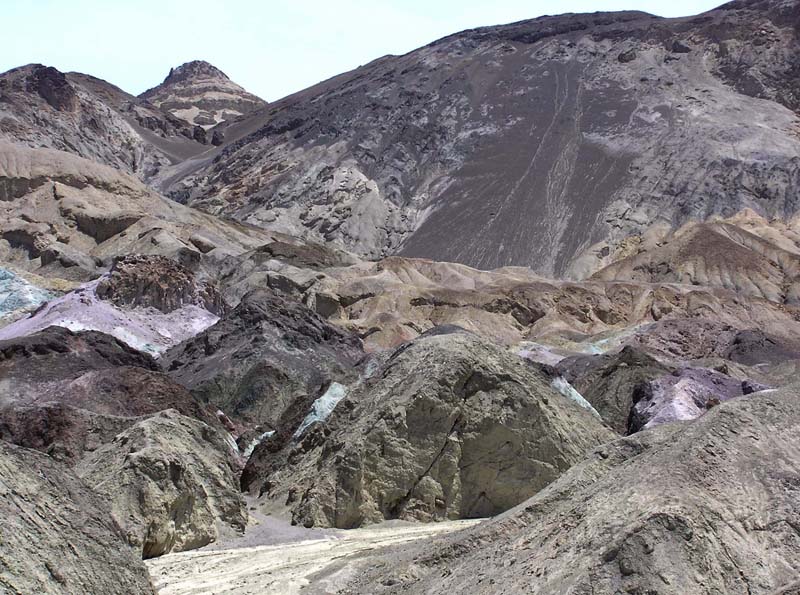
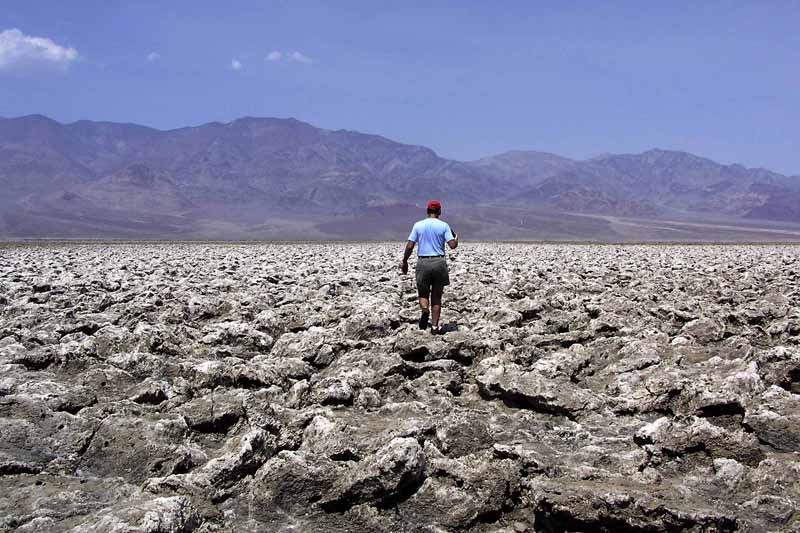
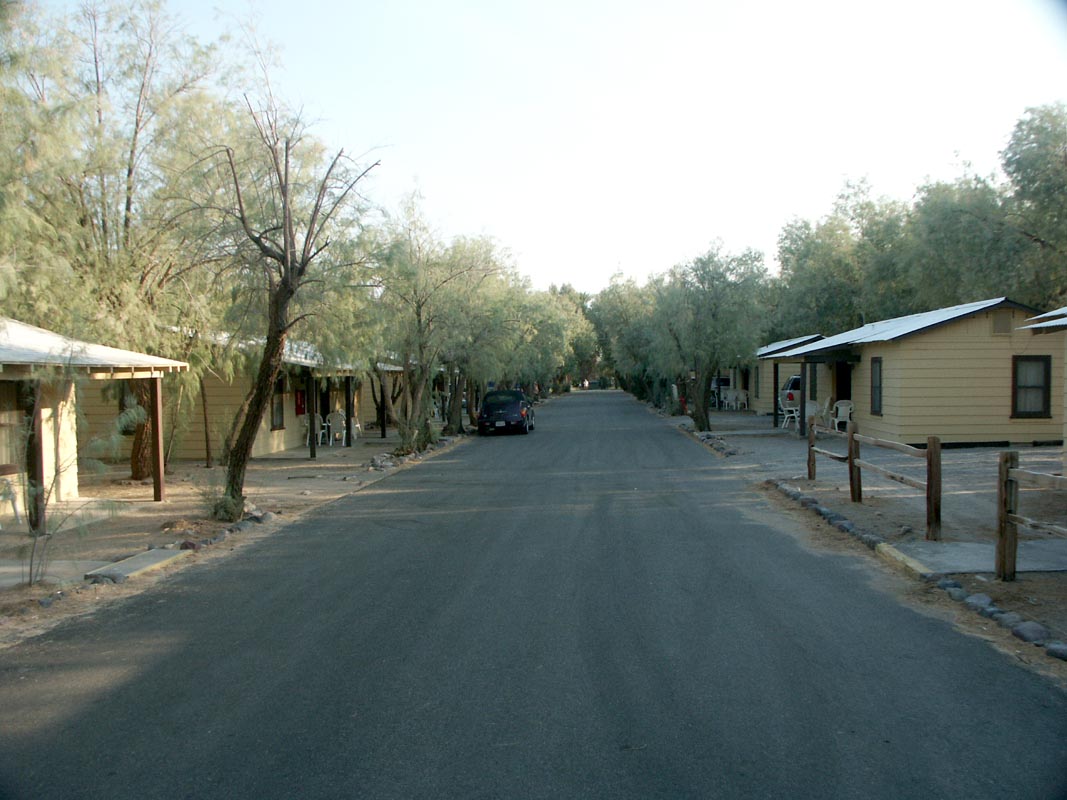
We spent our first and last night of the trip at Furnace Creek in Death Valley. The first day it was 118 degrees and the last day it was 123 degrees! Death Valley was a geologist’s paradise! We all visited Badwater Basin in Death Valley, which at 282 feet below sea level is the fifth lowest elevation in the world (first in the continental US). Photos of Badwater and other points of interest from Death Valley like the Artists Pallet, Devils Golf Course, Titus Canyon, Ubehebe Crater, and more, can be seen on the Skyscrapers website at www.theskyscrapers.org.

Thanks to Bob Horton for organizing such a wonderful trip! Unfortunately, Bob’s father passed away on Saturday July 17th and Bob was not able to go with us. Our thoughts and prayers continue to be with Bob and his family.
Mikly Way mosaic from White Mountain, July 2004
1
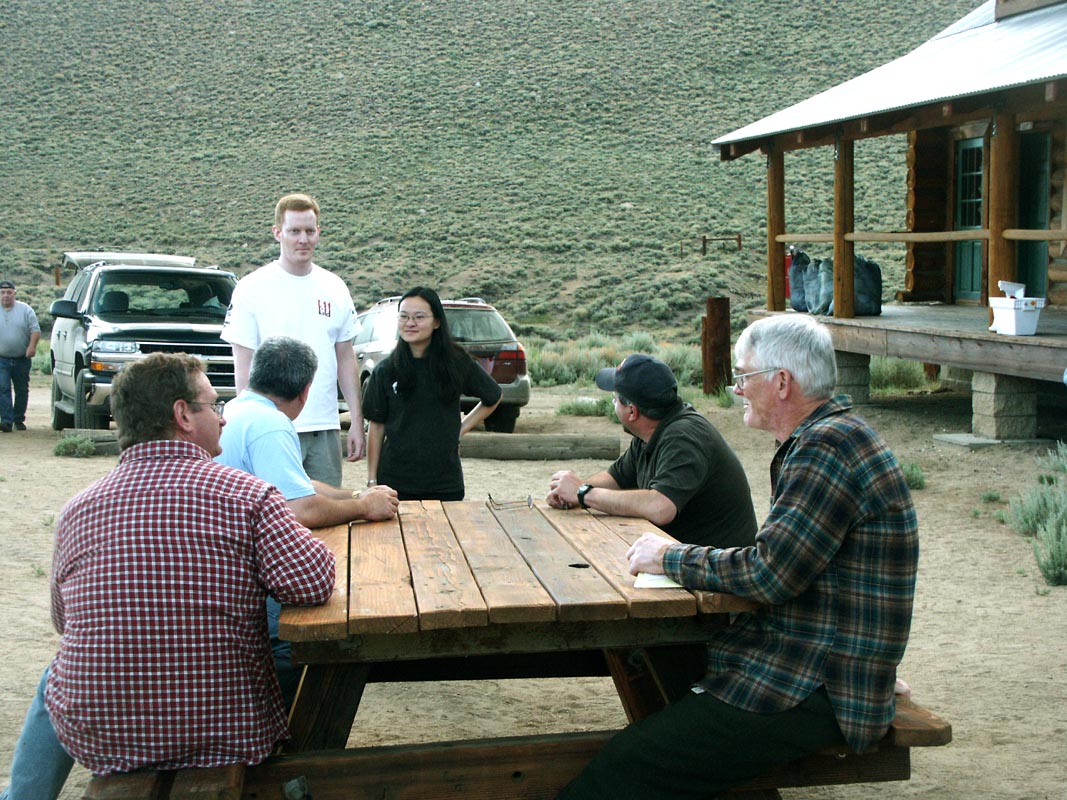
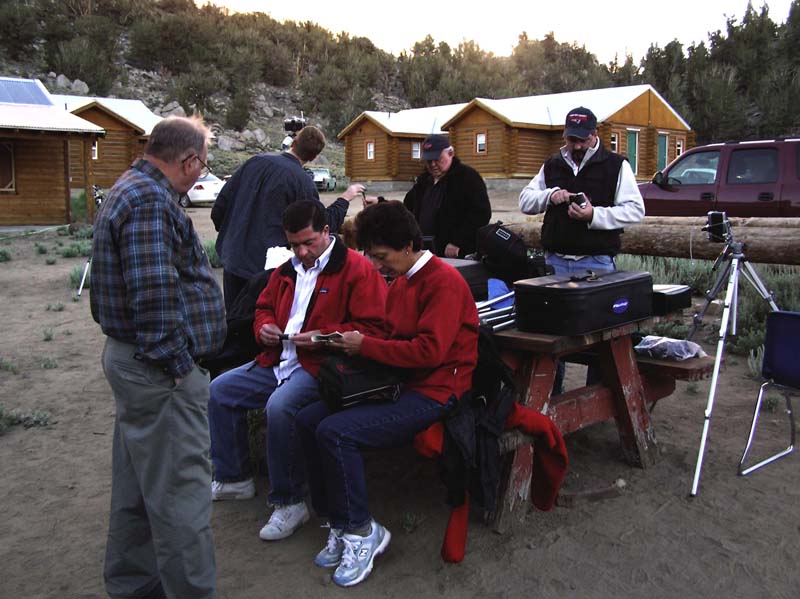
Early evening at White Mountain, Dan, Mercedes, and others prepare for another night of dark sky observing.  White Mountain Trip 2004
2
Overview of Badwater Basin.  White Mountain Trip 2004
3
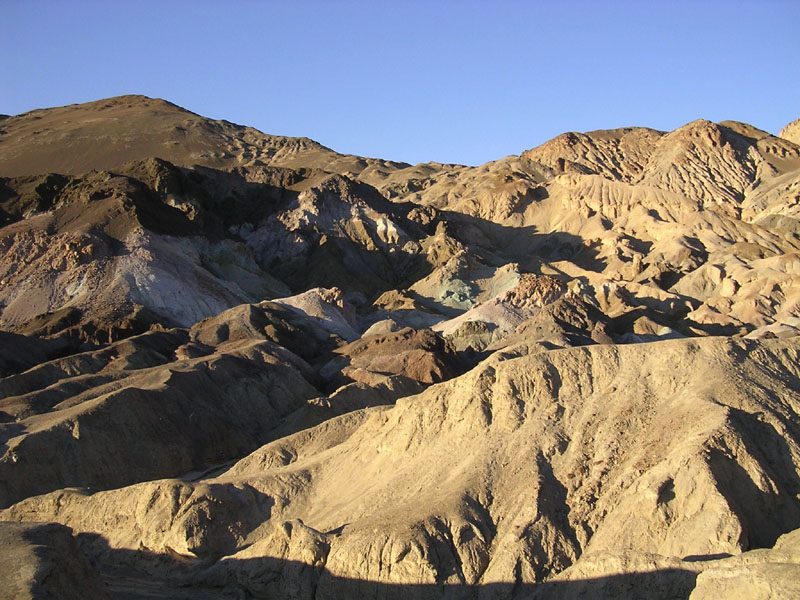
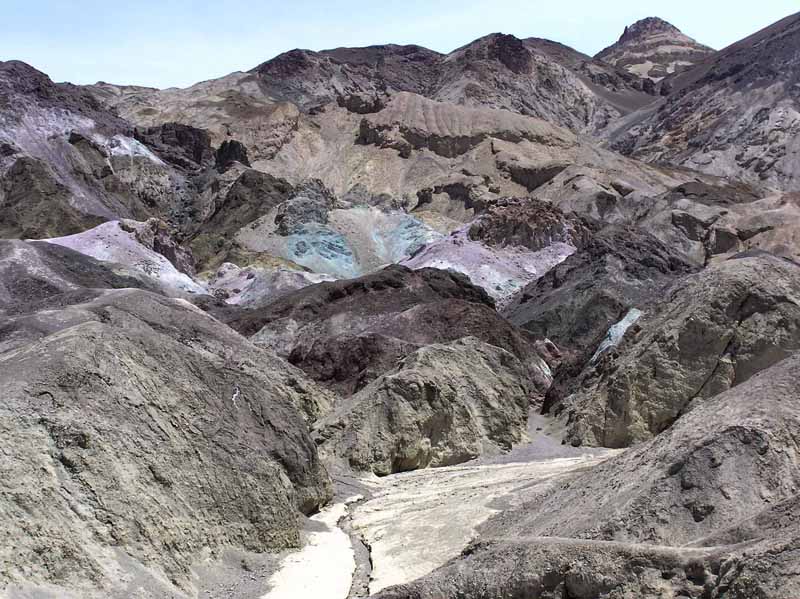
Artists Palette.  White Mountain Trip 2004
4
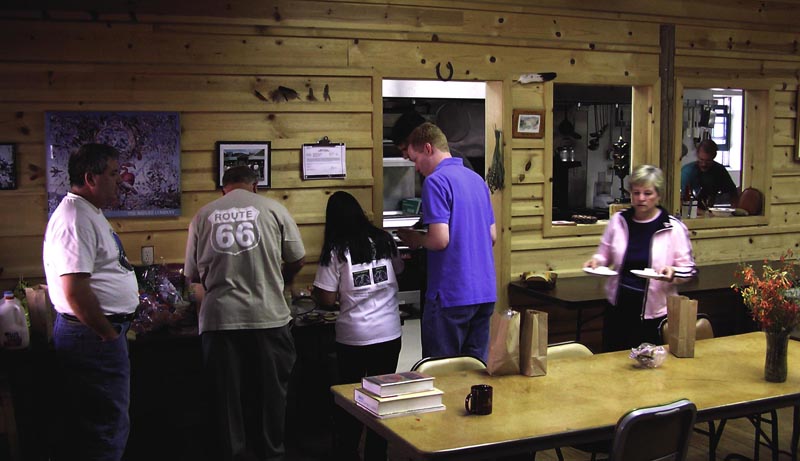
The chow line at Crooked Creek.  White Mountain Trip 2004
5
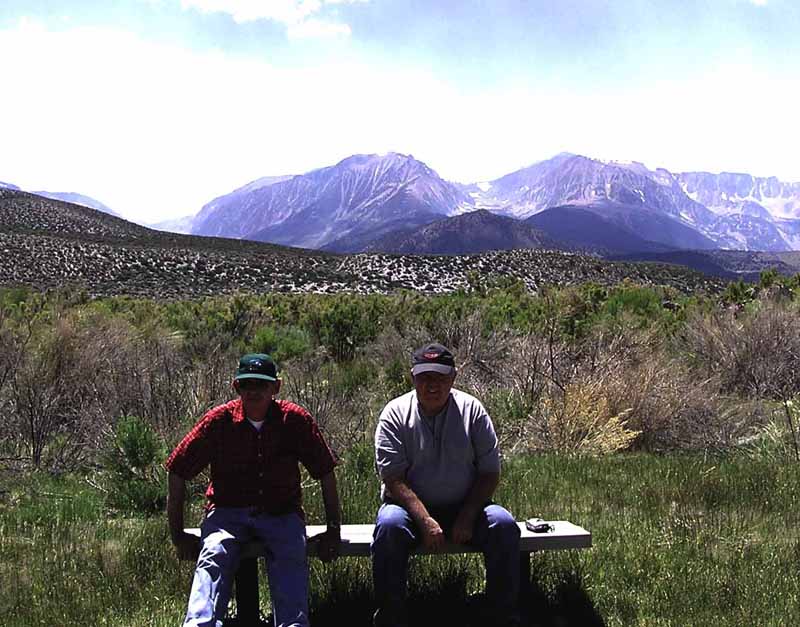
Fred and Glenn at Mono Lake.  White Mountain Trip 2004
6
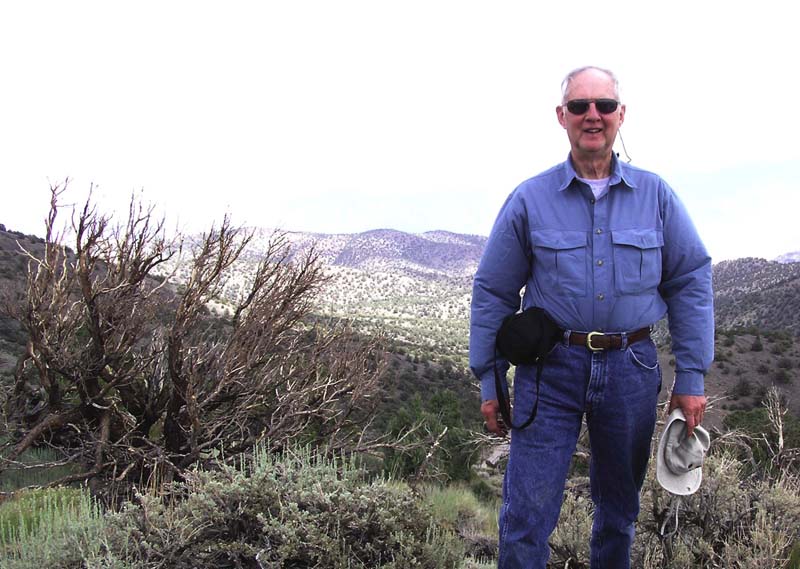
Ken Dore.  White Mountain Trip 2004
7
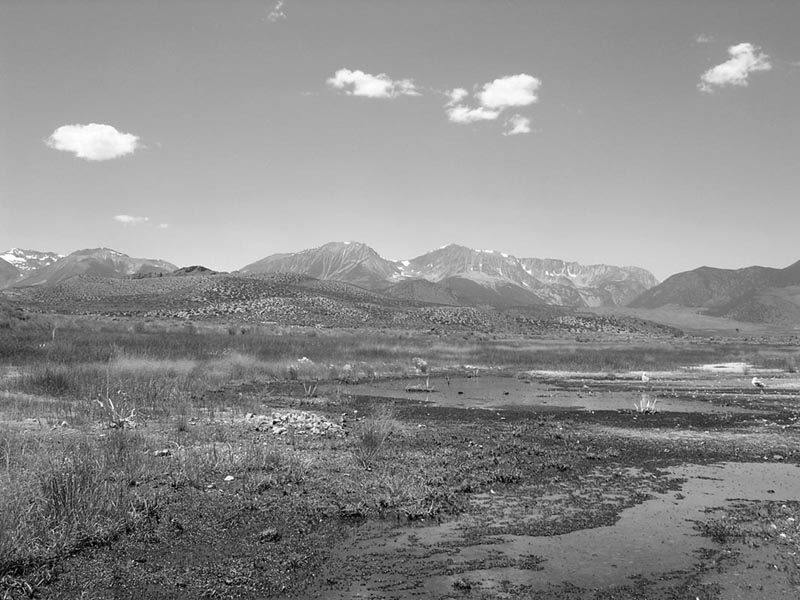
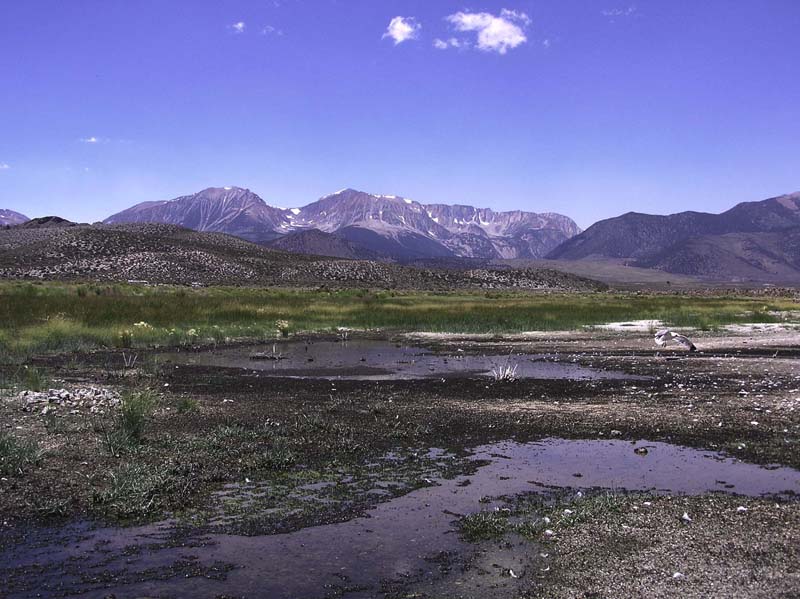
Scenic view at Mono Lake.  White Mountain Trip 2004
8
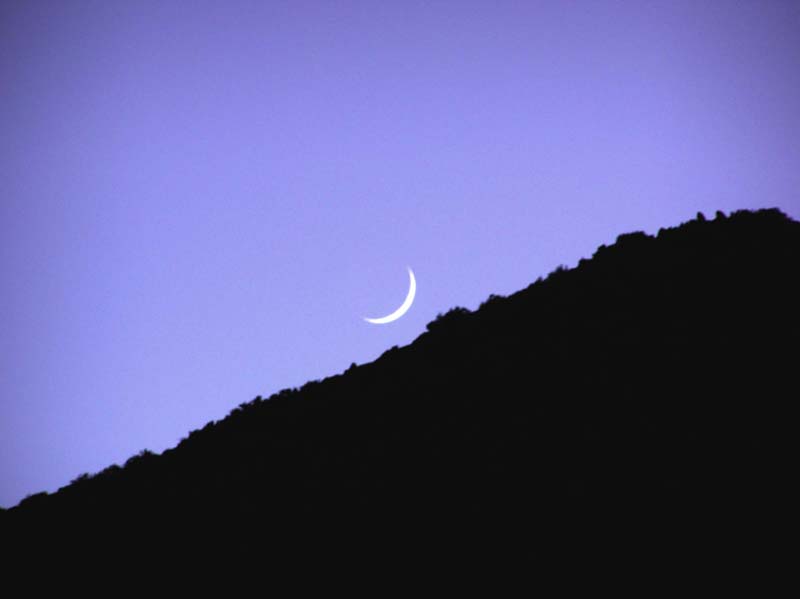
Moonset  at White Mountain.  White Mountain Trip 2004
9
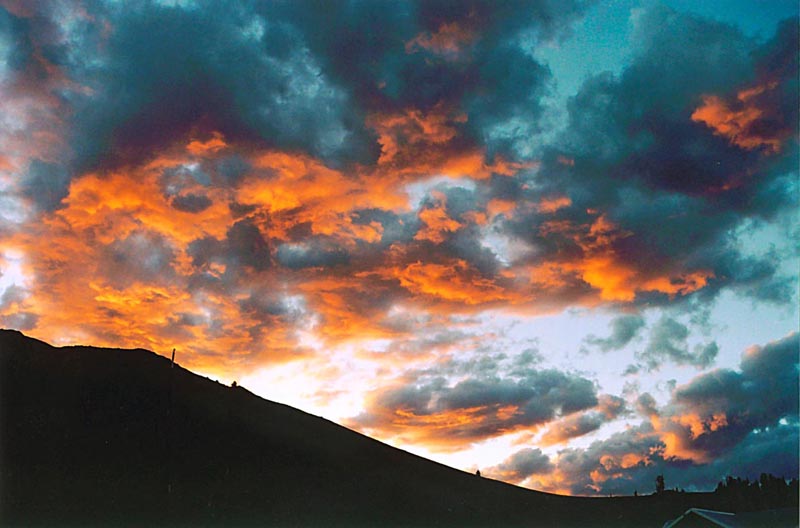
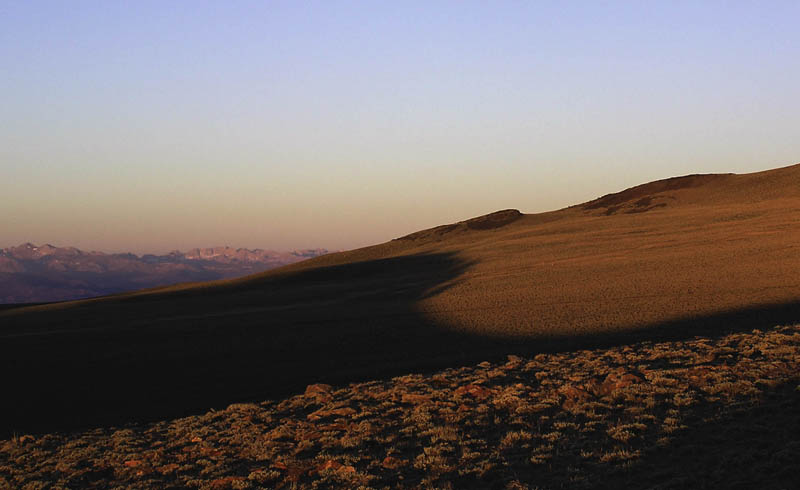
Sunset at White Mountain.  White Mountain Trip 2004
10
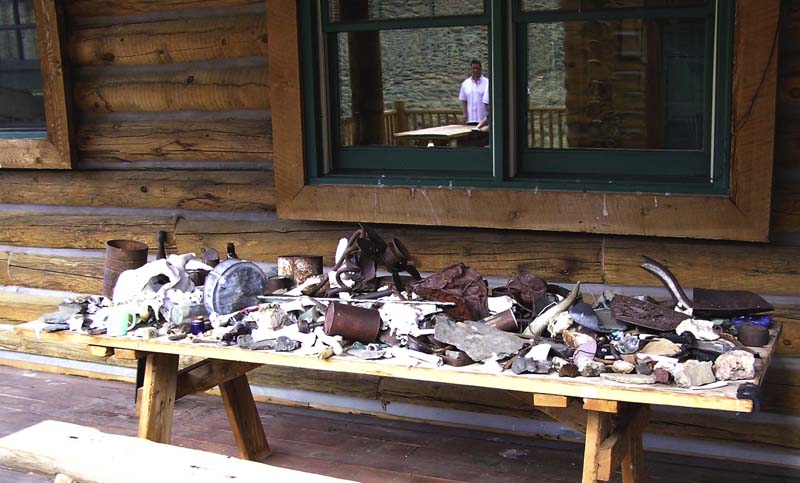
A table at Crooked Creek contains a collection of miscellaneous artifacts.  White Mountain Trip 2004
11
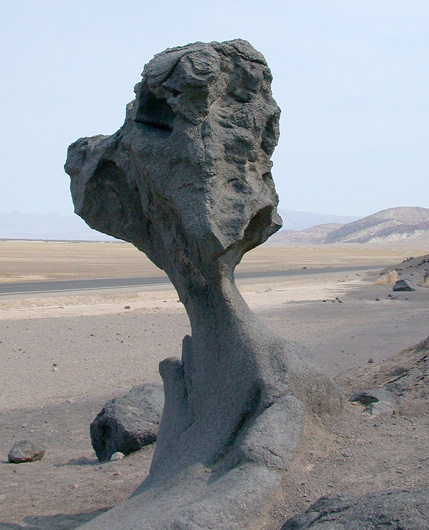
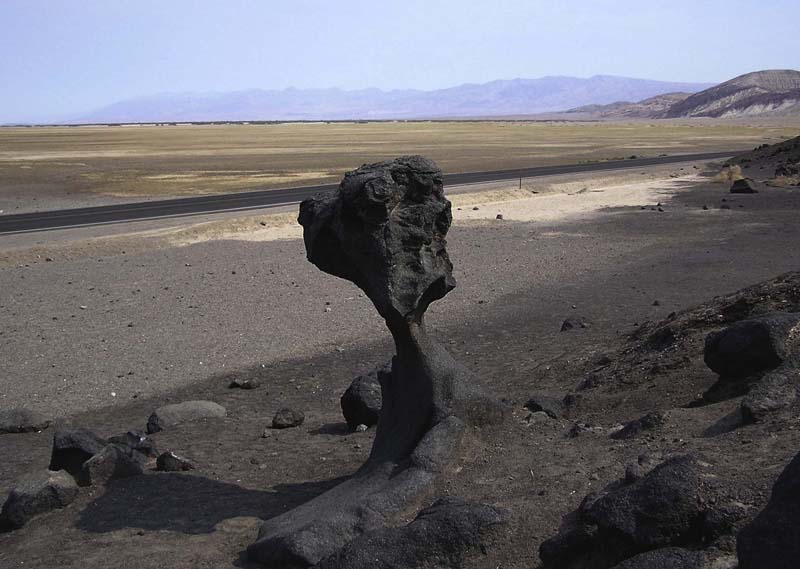
Mushroom Rock at Death Valley.  White Mountain Trip 2004
12
Artists Palette.  White Mountain Trip 2004
13
Artists Palette.  White Mountain Trip 2004
14
Scott Tracy takes a stroll through Devils Golf Course at Death Valley.  White Mountain Trip 2004
15
Dramatic sunset view at White Mountain.  White Mountain Trip 2004
16
Glenn Jackson and the tufa at Mono Lake.  White Mountain Trip 2004
17
Tufa at Mono Lake.  White Mountain Trip 2004
18
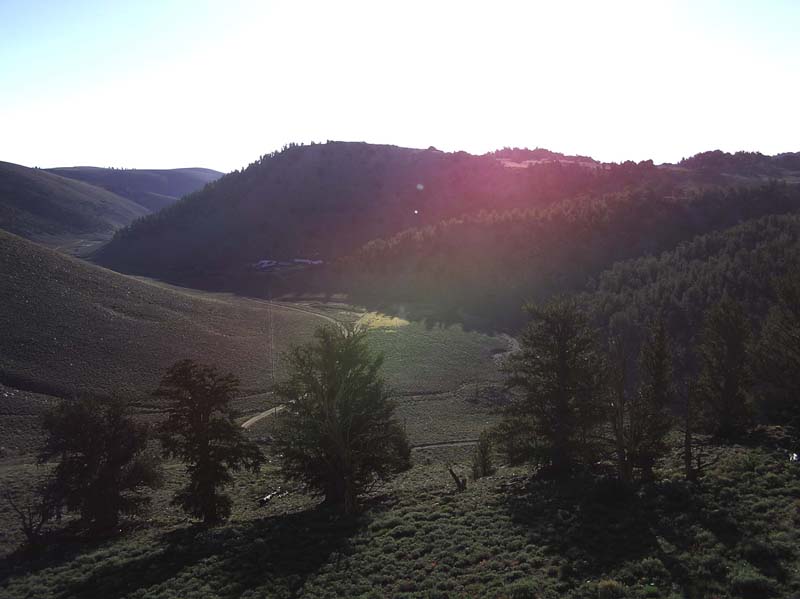
Sunrise over Crooked Creek.  White Mountain Trip 2004
19
White Mountain Trip, July 17-22 2004
20
Steve Hubbard
21
Despite some equipment problems, John Kocur is ready for a night of astrophotography.
22
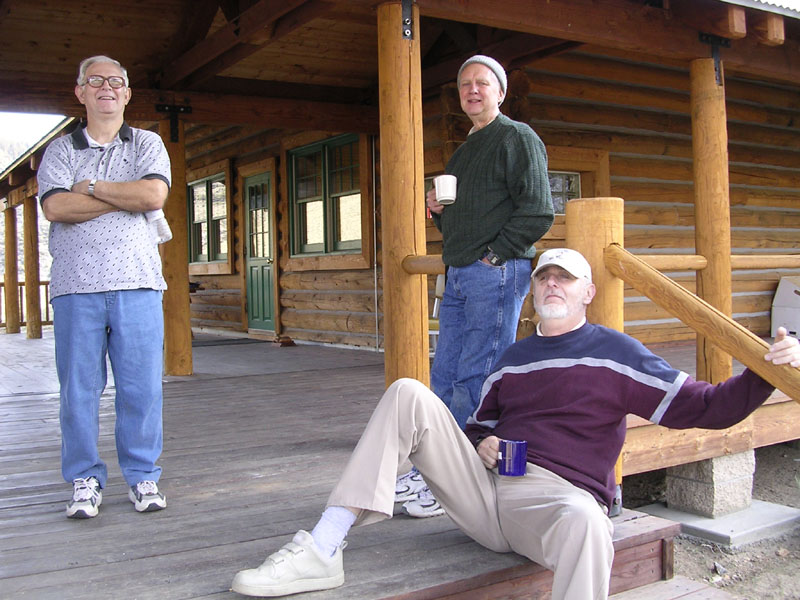
Members Jerry Jeffrey, Ken Dore, and Rick Arnold (seated)
23
Glenn Jackson and Krys
24
White Mountain Trip, July 17-22 2004
25
White Mountain Trip, July 17-22 2004
26
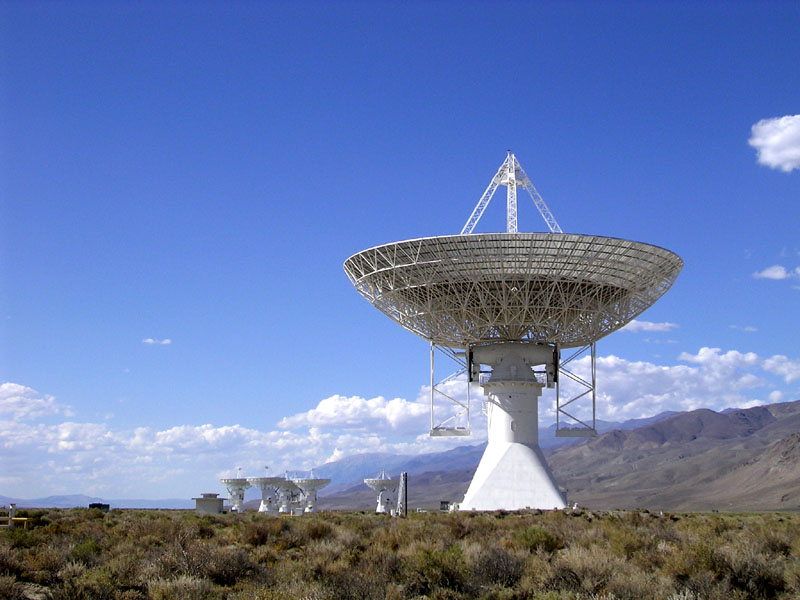
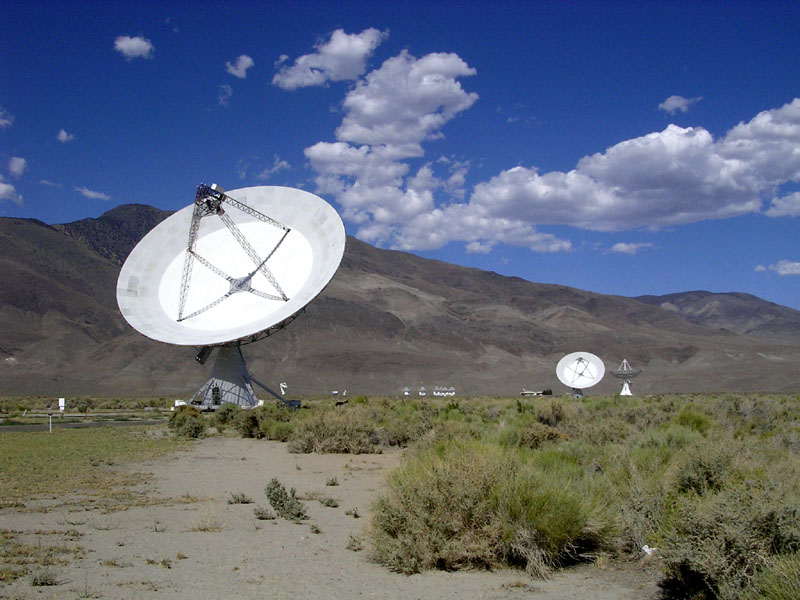
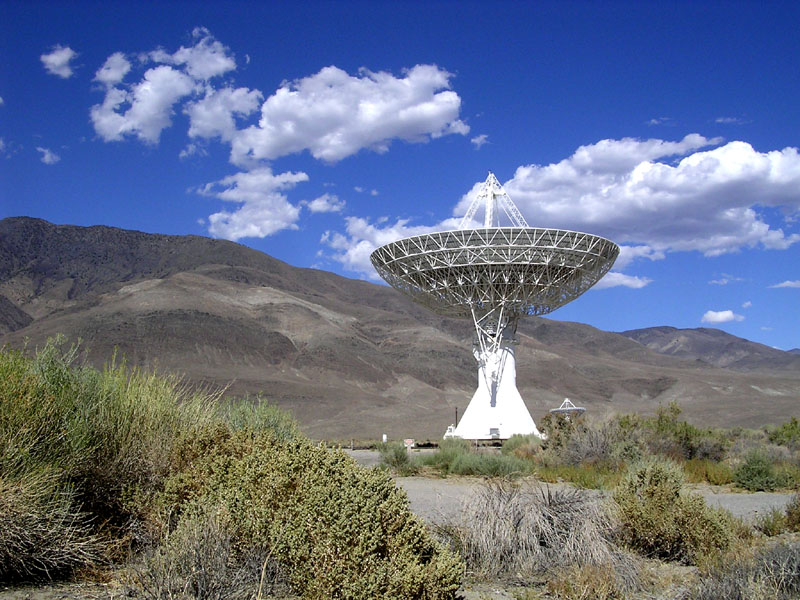
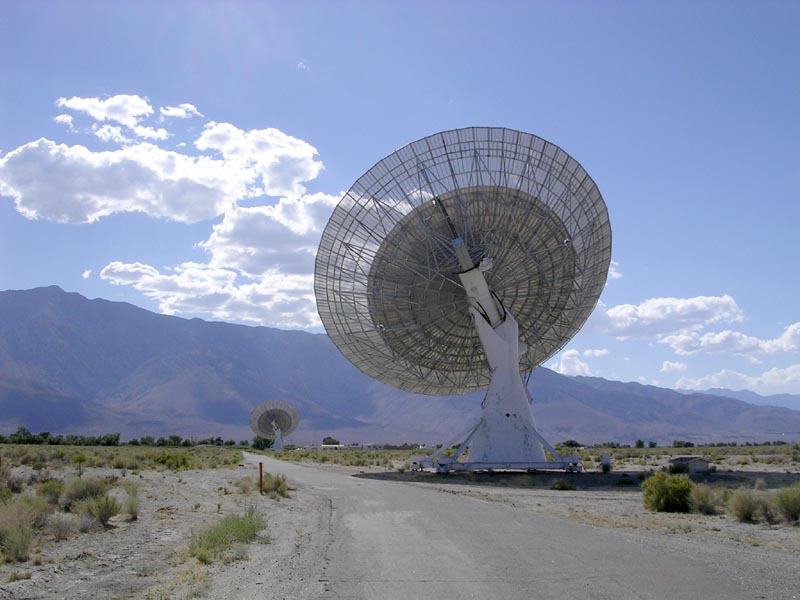
The Owens Valley Radio Observatory (OVRO) is the largest university-operated radio observatory in the world (CalTech)
27
New receivers and signal processing equipment have transformed the 27-meter (90-foot) telescopes into a powerful interferometer for studying the Sun. Solar temperatures range from about 5,500 degrees Celsius at the solar surface to two million degrees at a higher level known as the corona. In the corona, strong magnetic fields guide and constrain ionized gas. Solar flares occur when the energy stored in the tangled magnetic fields explosively releases. Electrons in these fields generate radio emission at wavelengths dependent on the strength of the field. The solar interferometer can be tuned rapidly to many different wavelengths so magnetic fields of different intensities can be seen almost simultaneously. Scientists can then determine the way in which these fields emerge, strengthen, entangle themselves, perhaps fire, and then decay.
28
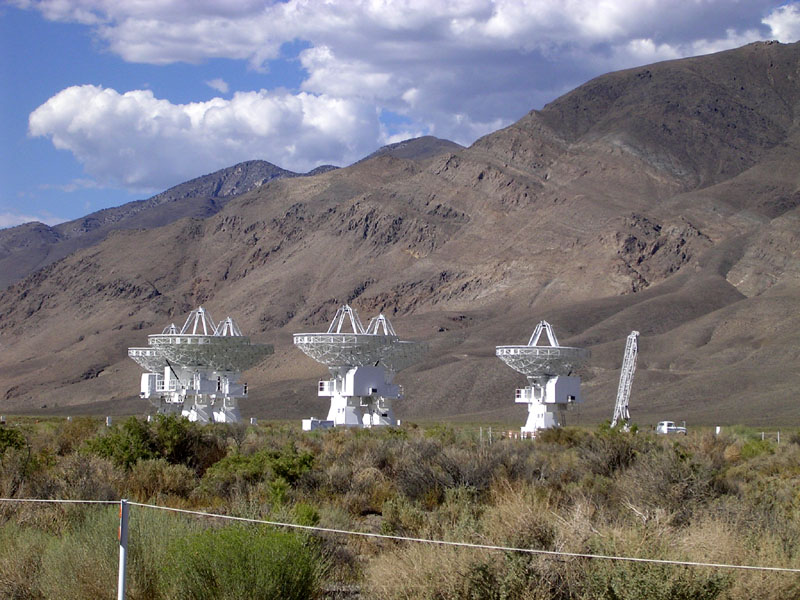
The newly completed millimeter-wavelength array consists of six high-accuracy radio telescopes, each 10.4 meters (34 feet) in diameter. The individual telescopes can be moved to observing stations along a T-shaped railroad track and pointed toward the same object in space. By combining the detected signals through a process called interferometry, extremely high-definition pictures can be produced. As in all interferometry, the degree of detail achieved depends upon the distance between the telescopes; for example, a single dish with a diameter of 300 meters (about one fifth of a mile) would be required to match the resolution that can be obtained with these new instruments.
29
An intensive program of microwave background observations is currently underway at OVRO using the 40-meter (130-foot) telescope. According to the Big Bang theory, the universe began some 15 billion years ago with an enormous explosion of primeval matter, and has been expanding and cooling ever since. The remnant heat radiation of this explosion can now be detected as very weak radio noise coming from all directions in space. A fundamental problem is how the once homogeneous, expanding gas gave rise to the current, lumpy distribution of stars and galaxies. Observations of this
30
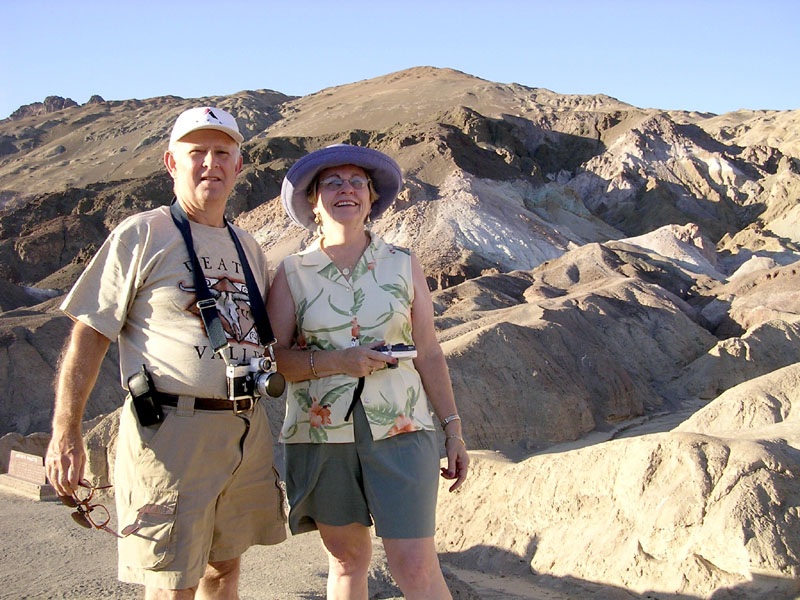
Jerry and Charlotte Jeffrey at The Artists Pallette
31
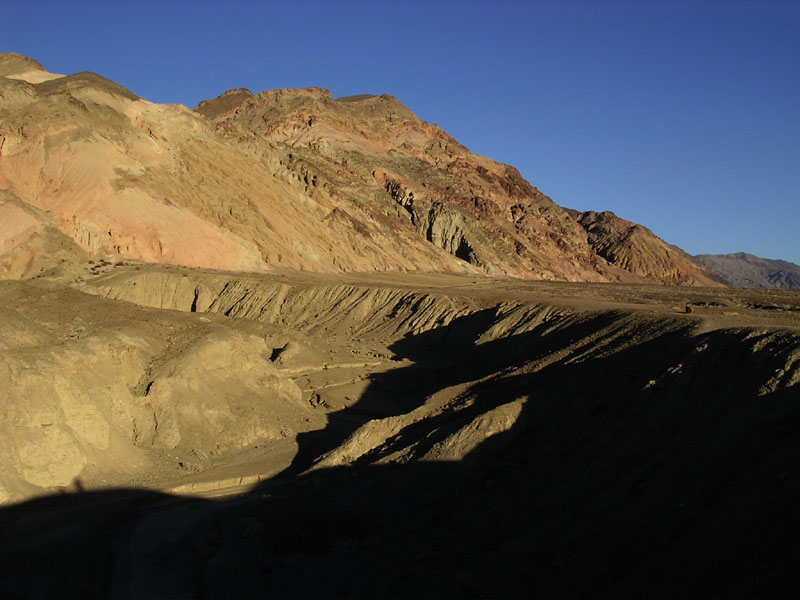
Artist's Pallete, looking south.  White Mountain Trip, July 21 2004
32
The sun sets on Artist's Pallette in Death Valley. July 21, 2004.
33
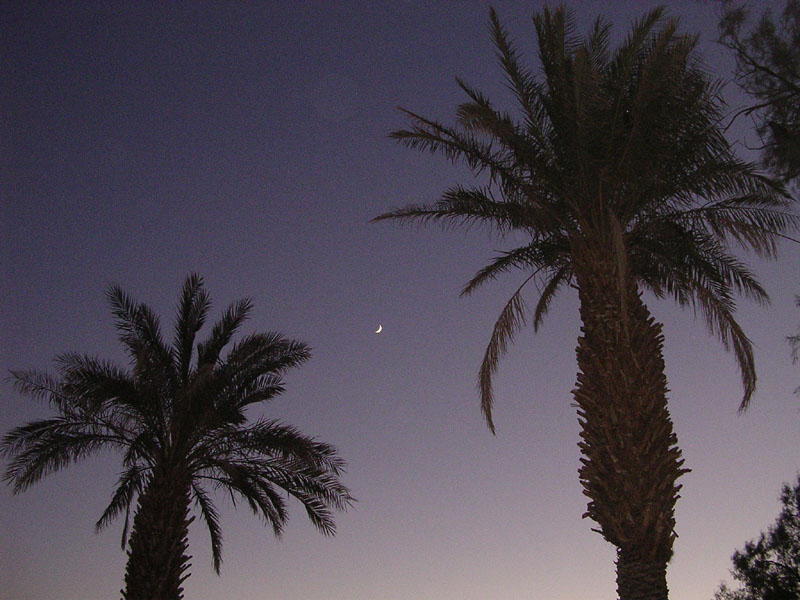
The crescent moon sets over Furnace Creek.  White Mountain Trip, July 21, 2004
34
White Mountain Trip, July 17-22 2004
35
White Mountain Trip, July 17-22 2004
36
White Mountain Trip, July 17-22 2004
37
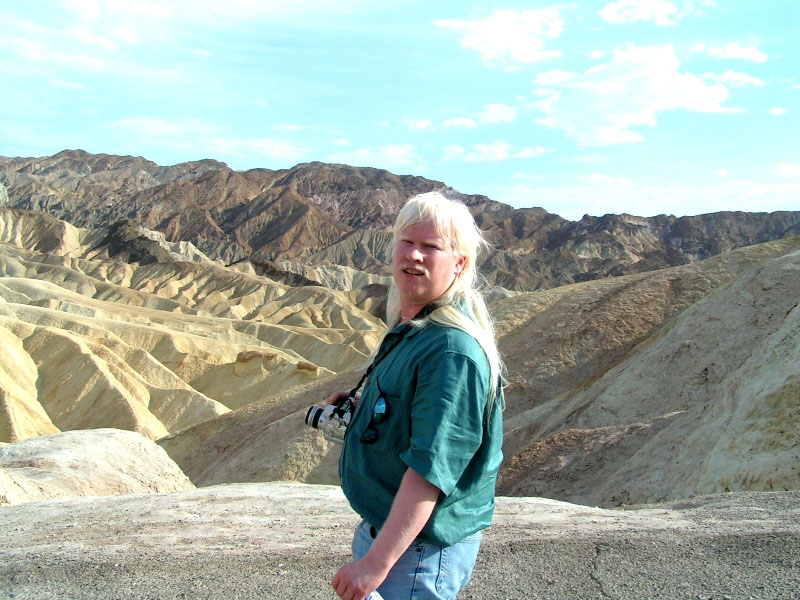
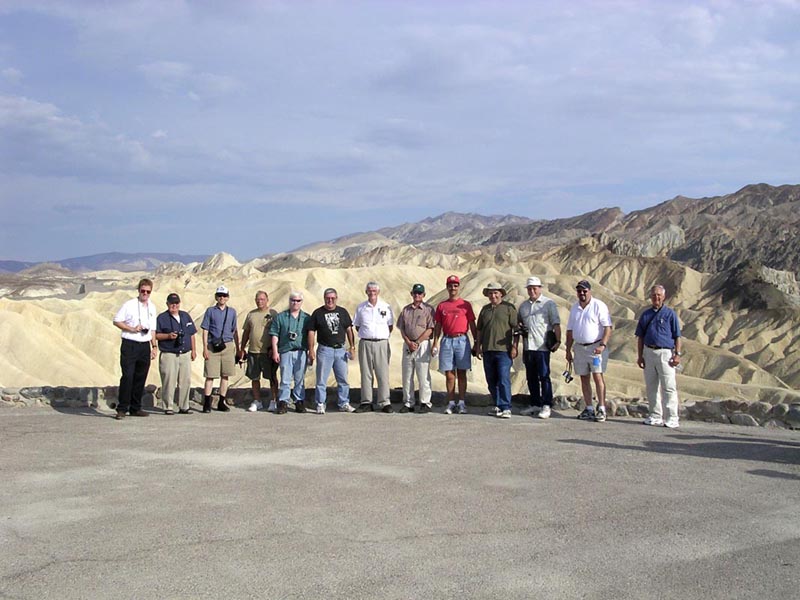
Jim Hendrickson at Zabriskie Point.  White Mountain Trip, July 17, 2004
38
White Mountain Trip, July 17-22 2004
39
White Mountain Trip, July 17-22 2004
40
White Mountain Trip, July 17-22 2004
41
White Mountain Trip, July 17-22 2004
42
White Mountain Trip, July 17-22 2004
43
White Mountain Trip, July 17-22 2004
44
White Mountain Trip, July 17-22 2004
45
White Mountain Trip, July 17-22 2004
46
White Mountain Trip, July 17-22 2004
47
White Mountain Trip, July 17-22 2004
48
White Mountain Trip, July 17-22 2004
49
White Mountain Trip, July 17-22 2004
50
White Mountain Trip, July 17-22 2004
51
Mushroom Rock
52
White Mountain Trip, July 17-22 2004
53
White Mountain Trip, July 17-22 2004
54
White Mountain Trip, July 17-22 2004
55
White Mountain Trip, July 17-22 2004
56
White Mountain Trip, July 17-22 2004
57
The cabins at Furnace Creek Ranch, where we spent the first and fifth nights of our trip in air-conditioned comfort.
58
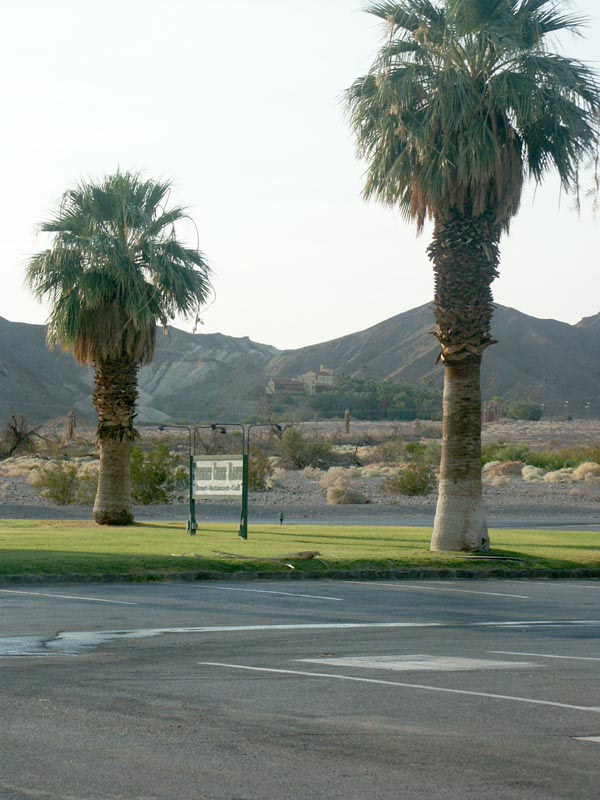
Looking out from the entrance of Furnace Creek Ranch, Furnace Creek Inn (which was closed for the season), can be seein up the hill in the background.
59
Badwater Basin, 282 feet below sea level, is the lowest point in the continental United States, and 5th lowest in the world.  High on the ledge directly behind this view, is a sign indicating the position of sea level altitude.
60
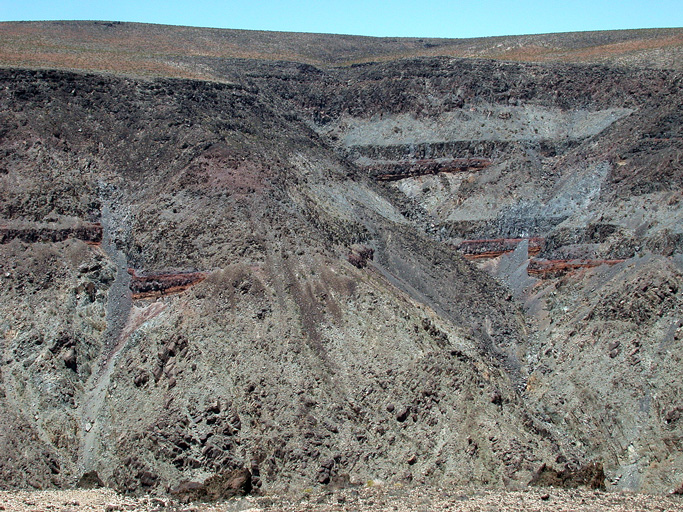
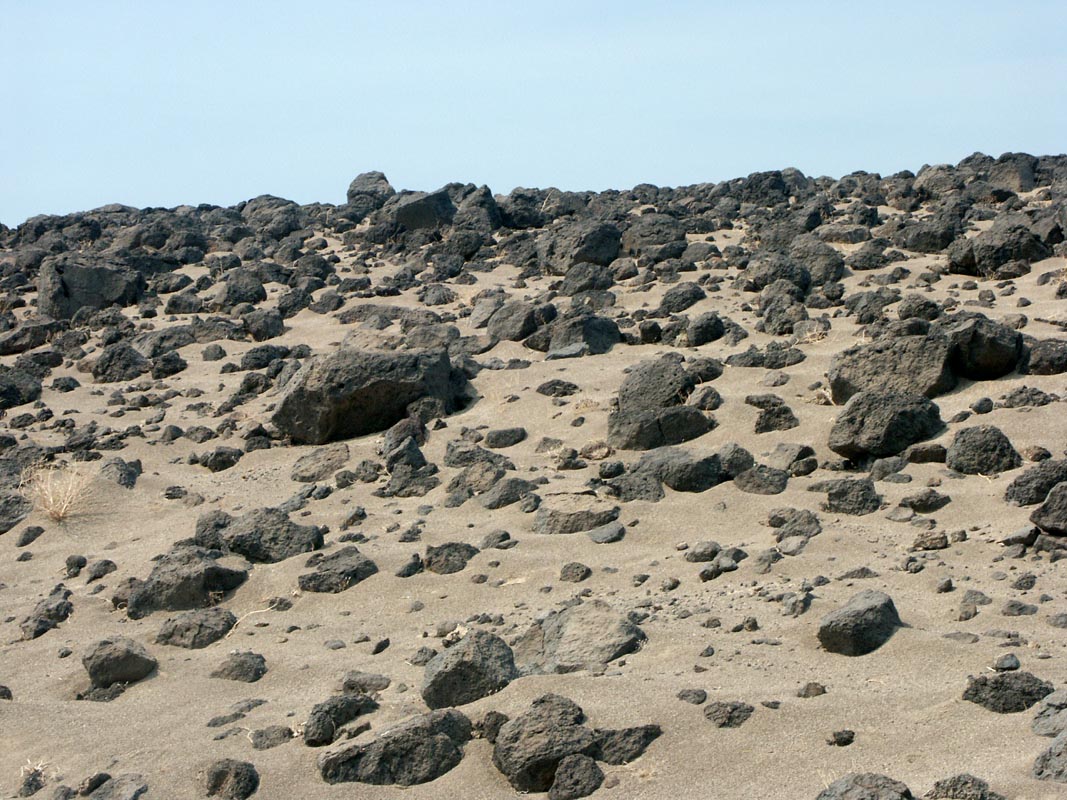
Not far from Badwather Basin and Artist's Pallette, this landscape  (minus its sparse vegitation) is said to be the closest landscape on Earth similar to that of Mars, due to its striking similarity to the terrain at the Viking lander site on the Red Planet.
61
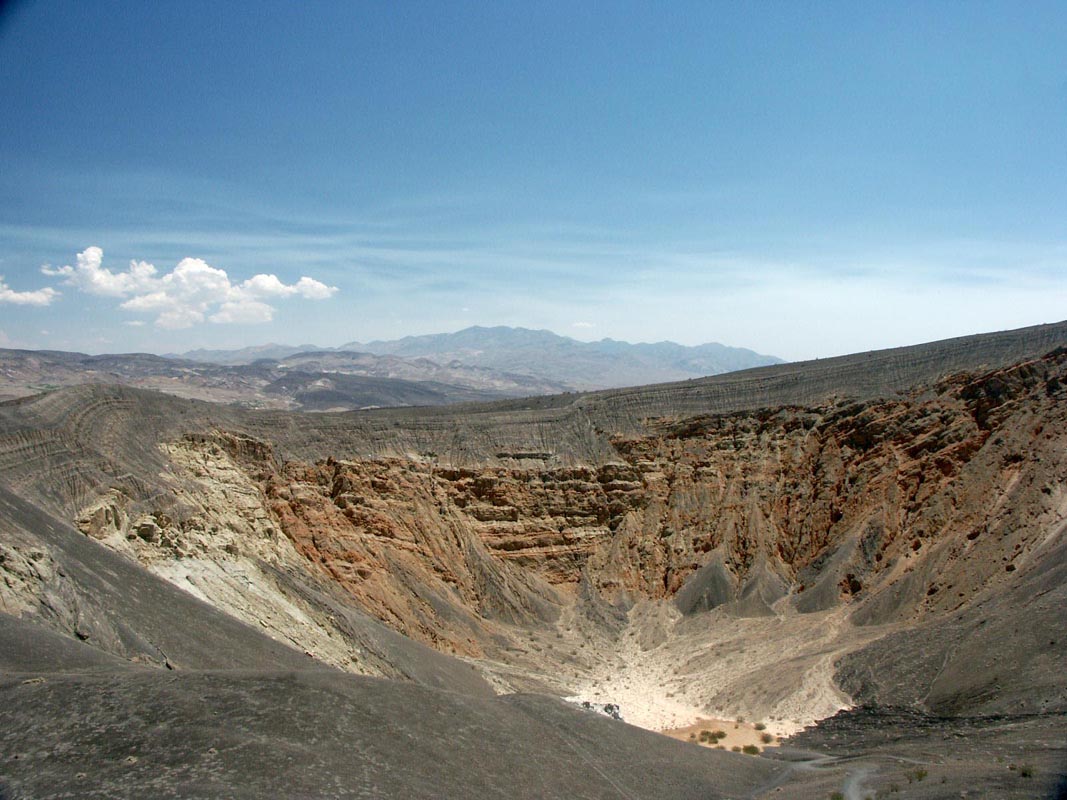
Ubehebe Crater, a volcanic steam vent in Death Valley.
62
The sun sets early at Crooked Creek Station due to its location in a valley.  Its still nearly three hours before it will be dark enough to start observing.
63
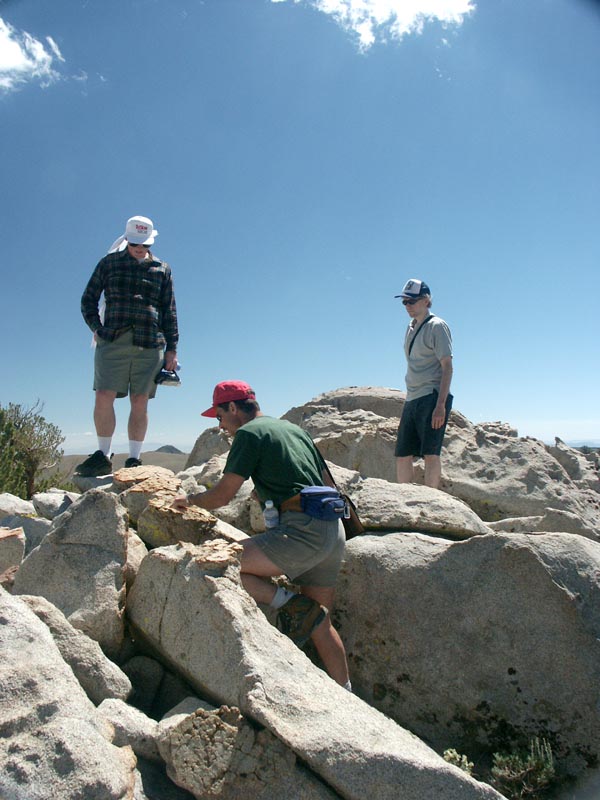
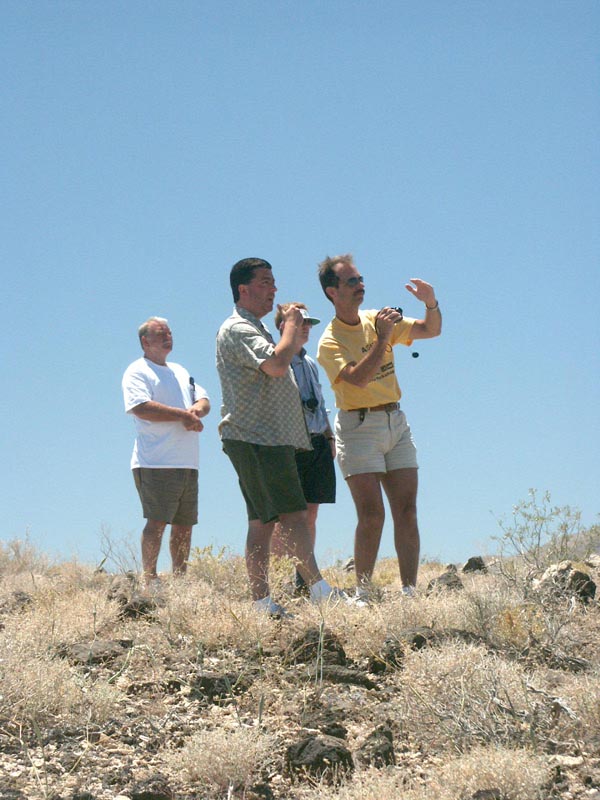
Scott Tracy points out zenoliths on the rock formations at the summit of the hill behind the White Mountain Research Station.
64
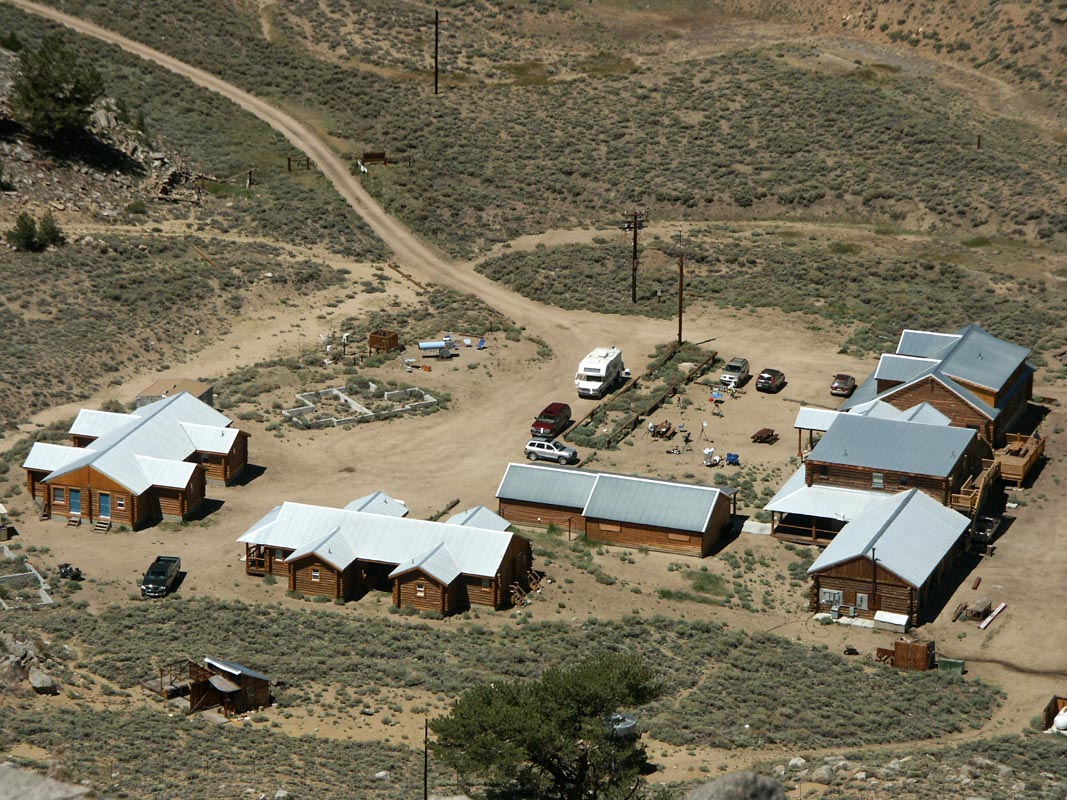
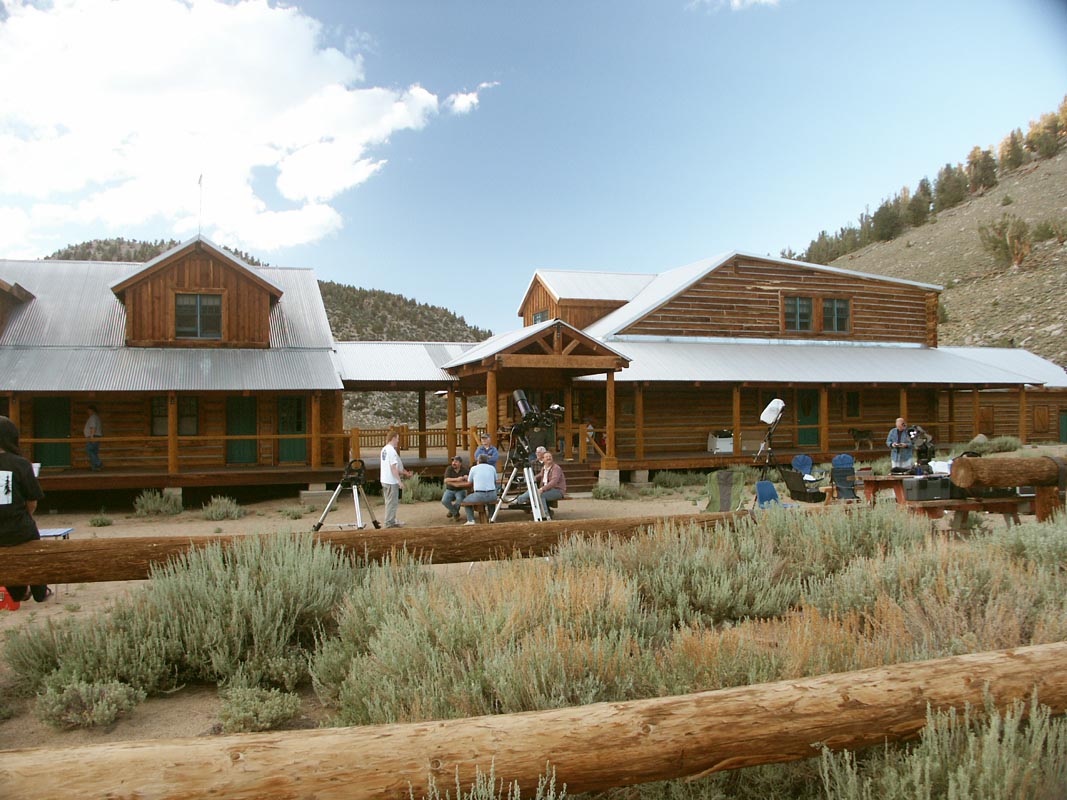
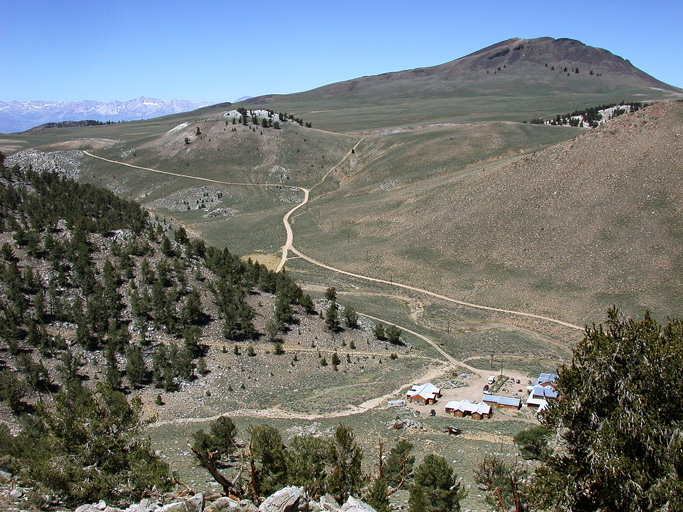
A bird's eye view of Crooked Creek Station, showing our observing field and the giant 22
65
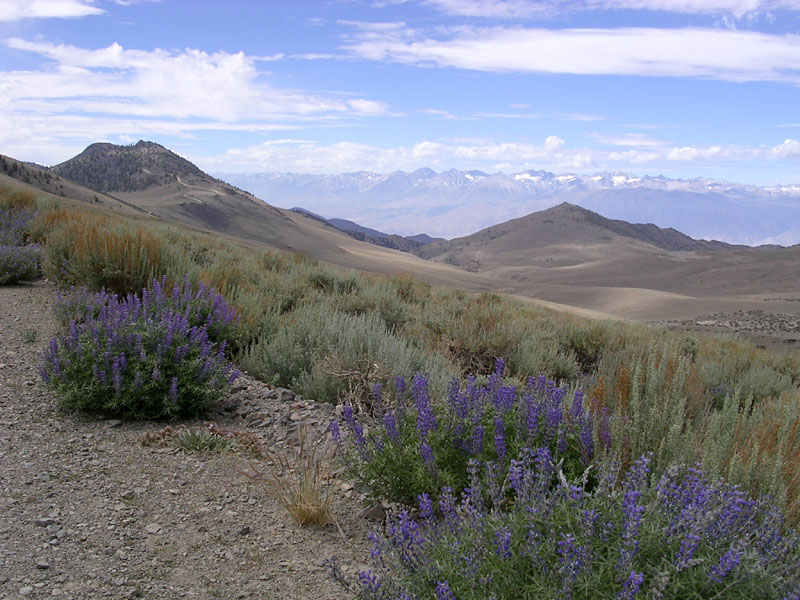
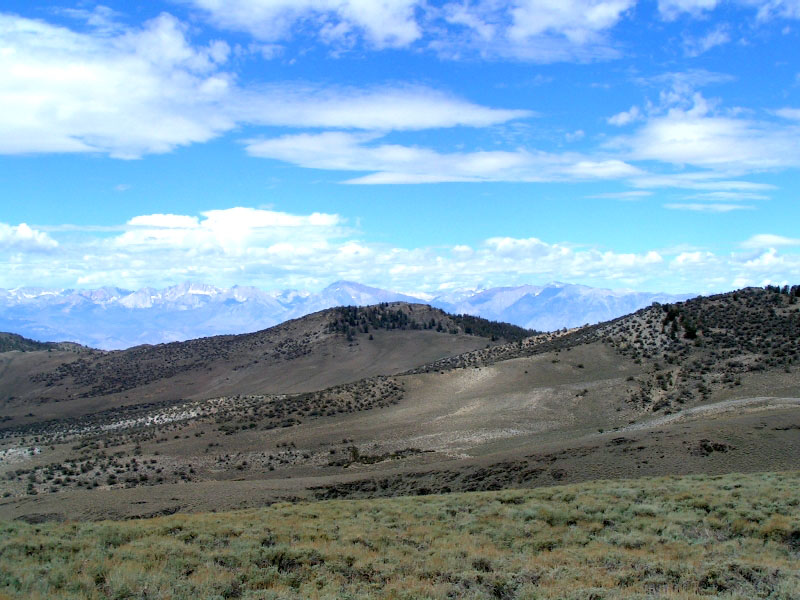
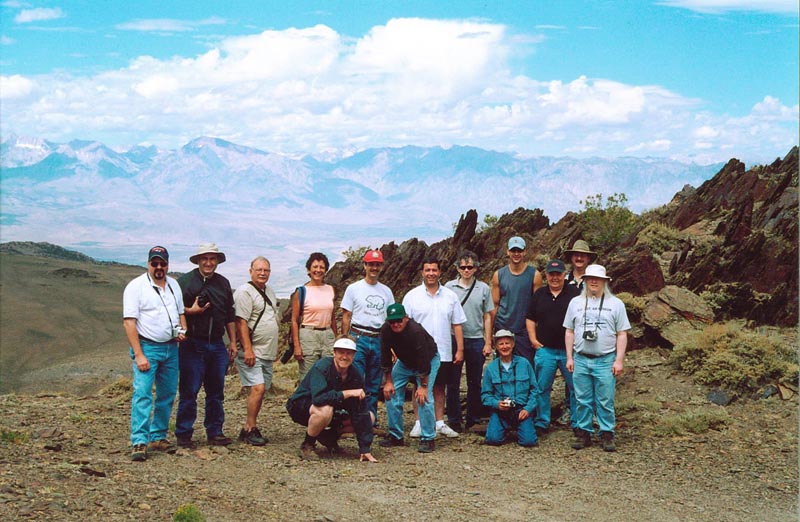
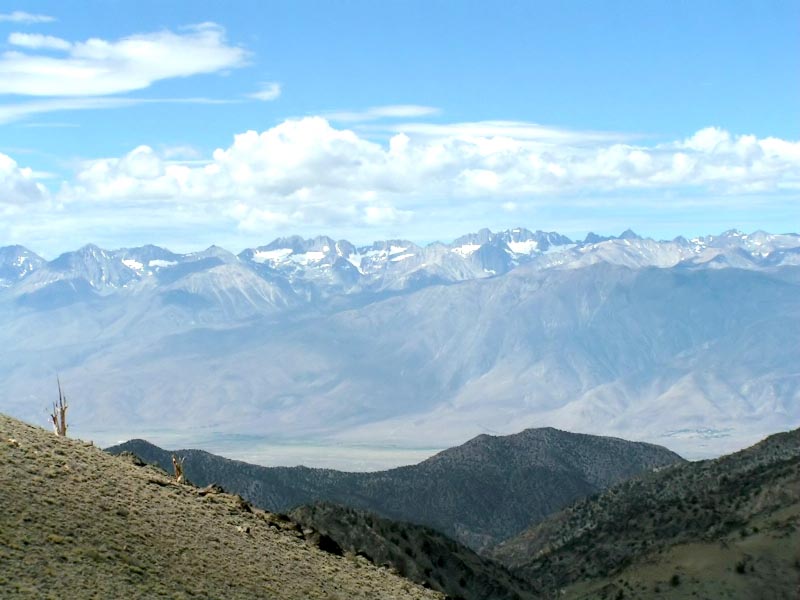
Seemingly a short hike from the Crooked Creek Station, it took us an hour to get to the top of the hill to gain this view.  The Eastern Sierra mountains can be seen in the background.
66
White Mountain Trip, July 17-22 2004
67
White Mountain Trip, July 17-22 2004
68
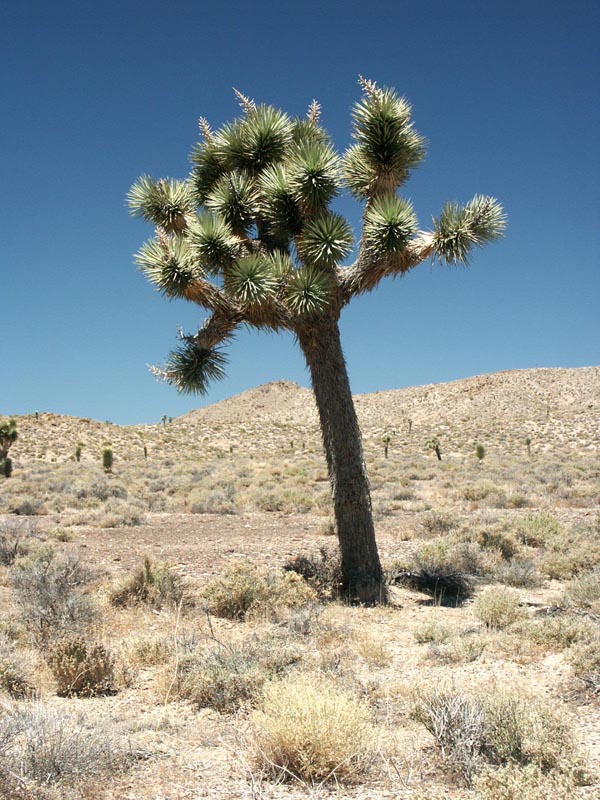
During the drive from White Mountain to Death Valley, one of the larger Joshua Trees we came across.
69
White Mountain Trip, July 17-22 2004
70
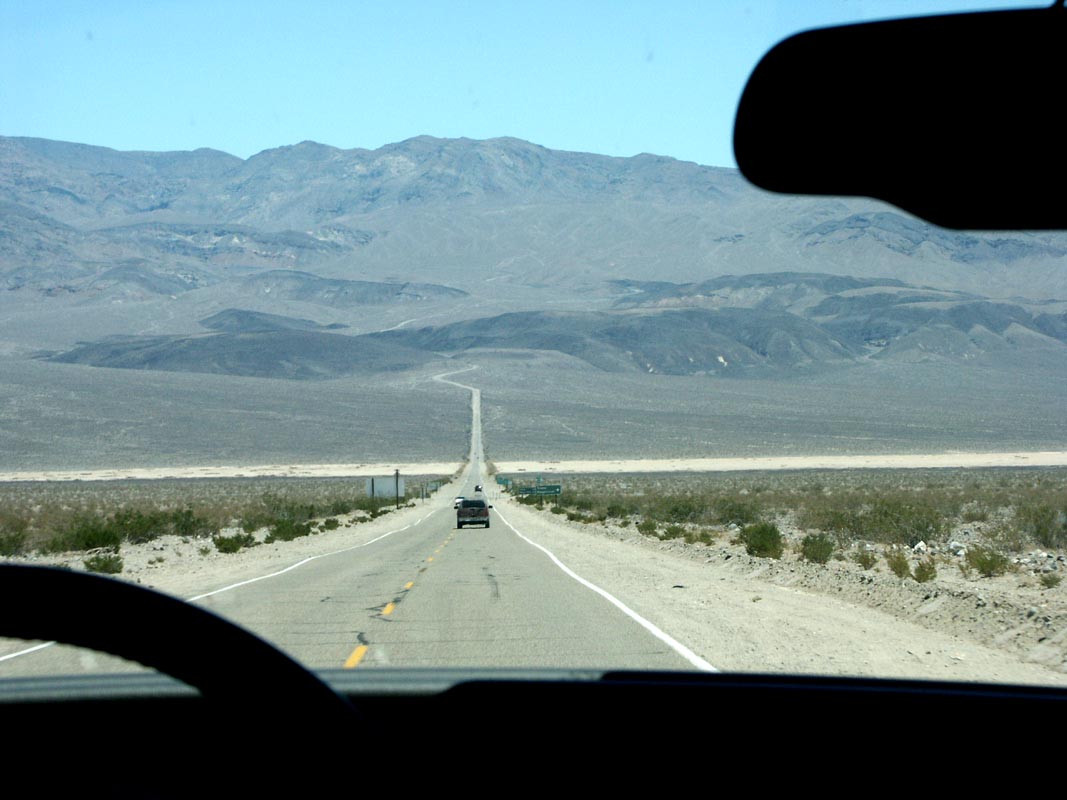
The drive back to Las Vegas through Death Valley.  We put nearly 1100 miles on the rentals during our 5 day expedition.
71
Along the shores of Mono Lake
72
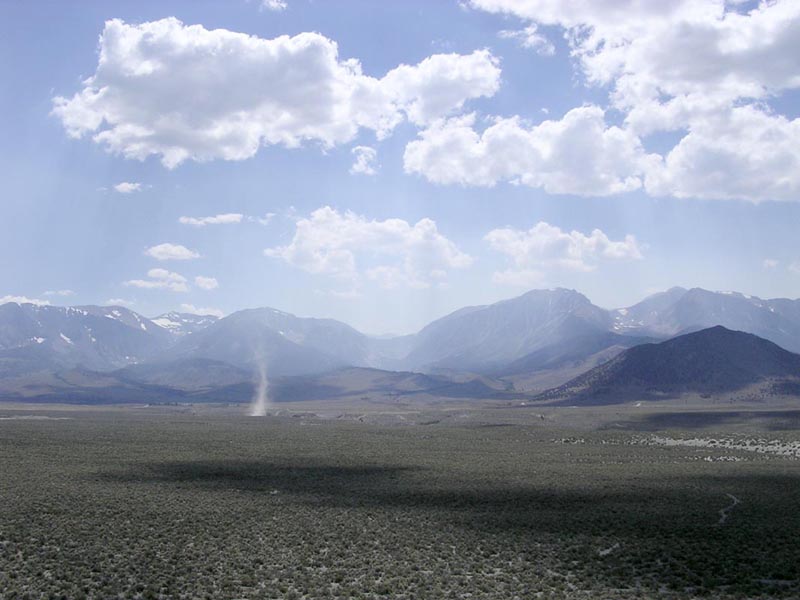
A large dust devil several miles away
73
The receeding shores of Mono Lake have exposed many giant Tufa's
74
75
76
77
78
79
80
81
The thermometer in the car reads 123 degrees (F) during our last day in at Stovepipe Wells in Death Valley.
82
83
84
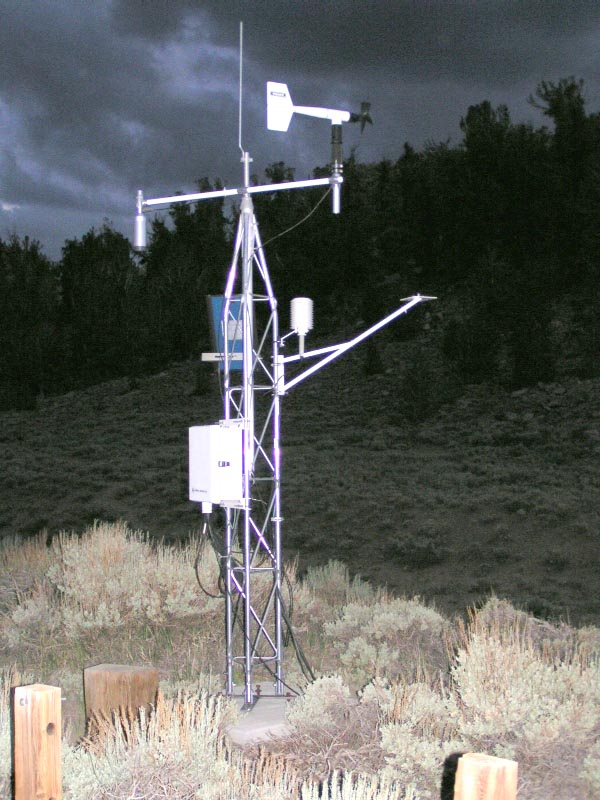
The weater station at Crooked Creek.
85
Ancient Bristlecone Pine Forest
86
Pat Landers and Jim Hendrickson setup and check equipment before observing from Crooked Creek.
87
Setting up the 22
88
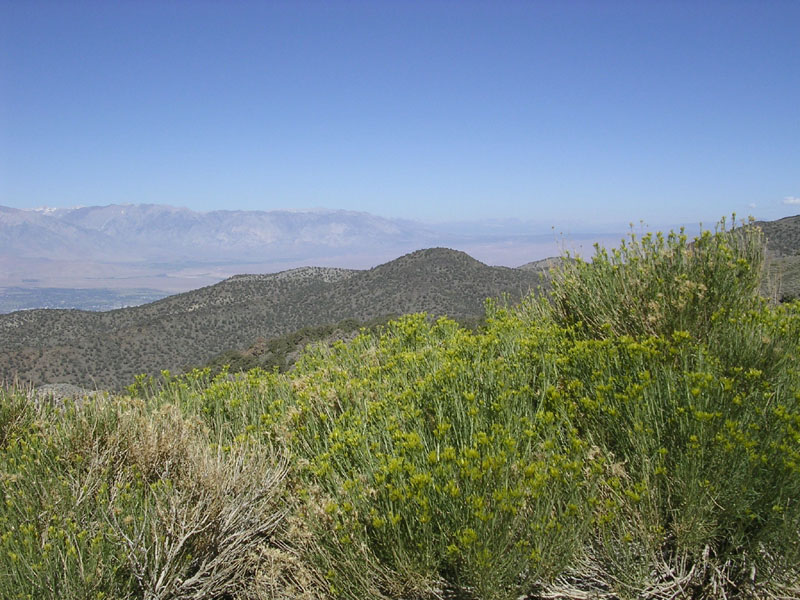
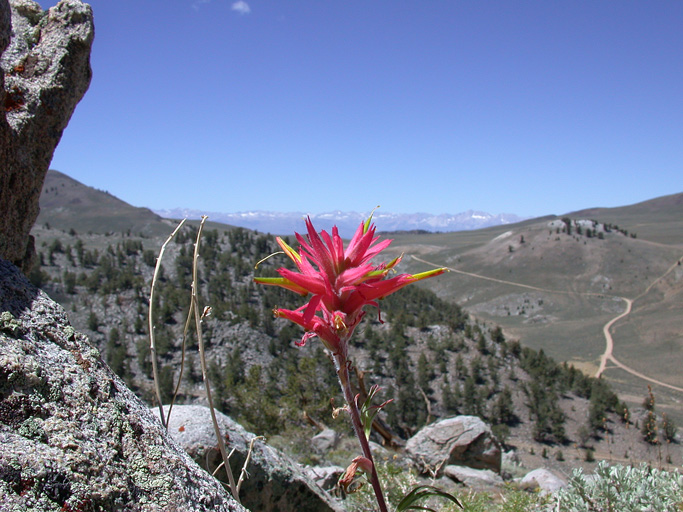
Sierra Mountains seen from White Mountain
89
Checking collimation of the 22
90