

Seagrave Observatory Night Season Opener
by Robert Janus & Jim Hendrickson
Weather: Clear, 45° calm
Participants: Bob Janus, Jim Hendrickson, Francine Jackson, Jay Baccala, Mike Kerr, John Kocur
Attendees: 12
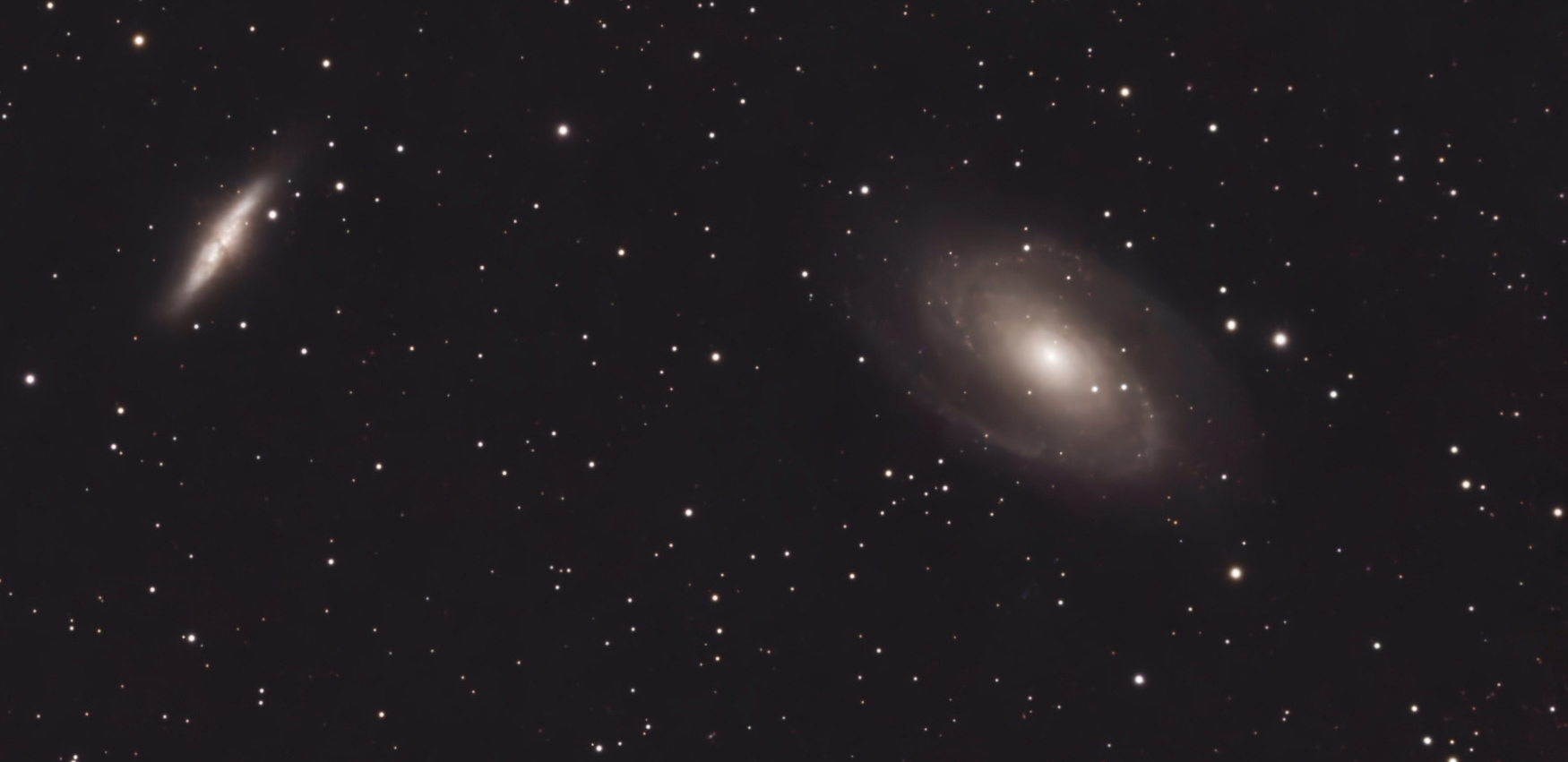
Observed: Moon, Mars, M44, M64, M104, NGC 4656, M81, M82, International Space Station
Photos: https://flic.kr/s/aHBqjCQLTU
Reports by Bob Janus & Jim Hendrickson
Was this the first Public Night for 2026? If so, we are off to a good start with a clear dark sky, no wind or bugs, and temperature about 45 degrees. Unfortunately, there was no Moon visible to celebrate the success of Artemis II.
Jim Hendrickson, Francine Jackson, John Kocur, Mike Kerr and Bob Janus were present to welcome 12 to 15 enthusiastic visitors. Jupiter was viewed through the Alvan Clack. Deep sky objects were seen and imaged with the Meade 12-inch and a SeeStar set up in the courtyard.
We closed around 11 pm.
Report by Bob Janus
John Kocur reports observing Sirius, Orion Nebula, Jupiter, M44, and Capella with his 8-inch telescope set up in the front yard.
At one hundred full days into 2026, Saturday, April 11 provided conditions well-suited for our season opener. Sunny skies and temperatures well into the 50s gave way to cool, and exceptionally clear and steady conditions optimal for observing planets as well as the deep sky. Wind was calm and there was not any hint of dew.
As the open hours started during twilight, Jupiter was the first object visible, so the telescope was first aligned to it. Guests started filtering in, including local friend and HP Lovecraft enthusiast Carl Johnson. As the sky darkened, Francine suggested trying for M44. The large cluster overflowed the field of view in the 12-inch SCT, so the view was preferred in the 80mm finder, which framed the entire cluster nicely. Francine excitedly called out a meteor she saw cross the field of view while viewing M44.
A few peepers kept us company during the night, but their numbers dwindled as temperatures dropped to below 40°F, until there was one, and then none.
About an hour into the evening, a great horned owl could be heard in the distance towards the west, making occasional calls for the remainder of the evening.
With the sky dark, I tried the galaxy NGC 2903, and while it was visible, it showed little structure and was a bit underwhelming. NGC 3242 (Caldwell 59), a planetary nebula in Hydra, was just about to transit, so it became the next target. As this object is a typical example of the eventual evolution of our Sun, this led to some great discussions about stellar evolution, supernovae (including Betelgeuse), and the perennial favorite topic: black holes.
By this time, M3 had risen high enough in the east to get a good look, rounding out a nice set of three distinctly different star clusters visible during the evening.
There were no passes of the International Space Station, but there was a Tiangong pass in the southwest that occurred during setup time, and we all missed it. Given how transparent the skies were, and with the lack of moonlight, a high number of satellites were seen crossing the sky until the last hour or so, some as bright as 2nd magnitude.
M104 was visible, but was still too low to clear the roof.
Before it went behind the trees, I decided to take another look at Jupiter under higher magnification, since the seeing certainly supported it.
As the crowds thinned, I turned the telescope to a more obscure target: the carbon star U Hydrae, which showed a vivid orange color in the scope. By this time, most everyone had left, and I turned the scope to Regulus, then finally ending with the galaxy pair M65 and M66, both of which showed hints of spiral structure.
In total, about a dozen visitors came to view through the telescope. We had a lot of great discussions about topics ranging from the recently concluded Artemis II mission to the Moon, meteors (one of the visitors saw a bright one low in the south), interstellar space travel, and the probability of extraterrestrial life. One of the visitors, Nick, was quite enthusiastic, asked a lot of good questions about getting a telescope, and planned to visit again and even join Skyscrapers.
Just about everyone had left by 10:45pm, so I closed the telescope. Out front, John Kocur was packing away his telescope, and Bob Janus and Michael Kerr had just finished closing the 8-inch refractor. By 11:00pm we had closed for the night, concluding a very successful first open night of the season.
Report by Jim Hendrickson


