


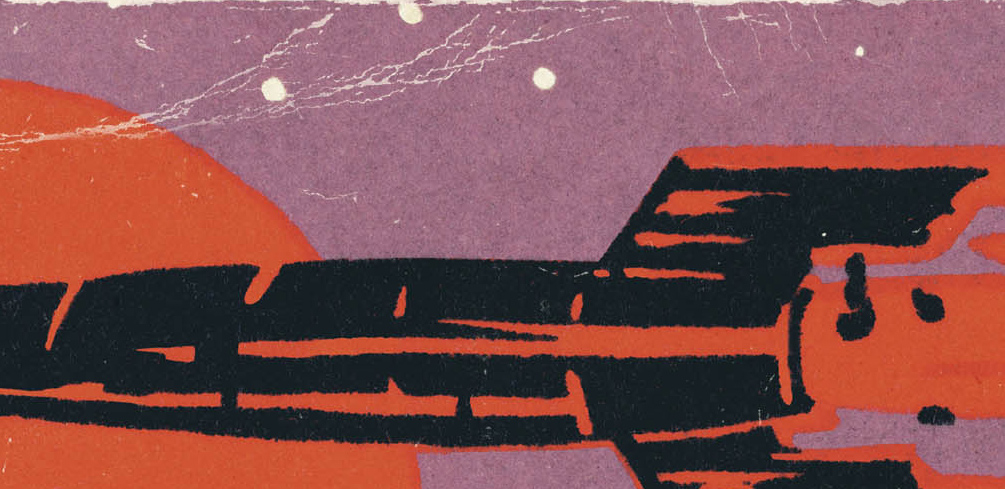
For the Love of Mars: A Human History of the Red Planet
May 2026 :
For the Love of Mars: A Human History of the Red Planet
By Matthew Shindell, Chicago: The University of Chicago Press, 2023, ISBN 978-0-226-82189-4, Hardbound, $27.50, US
Reviewed by Francine Jackson

Recently, I read another book on Mars, The Martians, by David Baron. It was written in more of a lighthearted tone, concerning the work of, especially, Percival Lowell, and those who tended to follow him.
For the Love of Mars, on the other hand, is a more serious and almost scholarly history of the study of Mars, although it does begin with fairly contemporary spacecrafts to the planet, not just those of NASA, but China and the UAE, and others.
And then, we go back in time, to the early sky gazers and their observations of the movements of celestial objects, and how they gave such human qualities to what they saw. Mars, especially, was notable because of its relatively faster motion than the other planets, plus its reddish color made it stand out among the others.
Mars was also considered a part of the reason for the Black Death, as its close association with Jupiter and Saturn signaled a “universal and indiscriminate punishment” for mankind’s wicked ways. Throughout this book we go backwards and forwards, comparing the concept of a reddish planet and its place in the sky. Even Dante traveled to Mars, just as the Martians traveled to Earth, courtesy H. G. Wells.
About halfway through this book, we come close to today, with information concerning most of the orbiters that have mapped virtually all of the planet, and rovers, some of which have traveled farther than ever believed.
For the Love of Mars is a much more comprehensive book than The Martians, beginning with the very early observers, and finishing with the latest information courtesy of such missions as Viking, Opportunity, Perseverance, and all other machines that have opened our eyes to the true measure of our nearest outer planet. It encourages us to want to travel there. Perhaps the time isn’t as far as imagined. . .? Matthew Shindell certainly hopes so.


