

Book Review: Robert Goddard's Massachusetts
April 2026 :
Robert Goddard's Massachusetts
By Kevin Schindler and Charles Slatkin, Charleston, South Carolina: Arcadia Publishing, 2026, ISBN 9781467163149, Softbound, $24.99, US
Reviewed by Francine Jackson

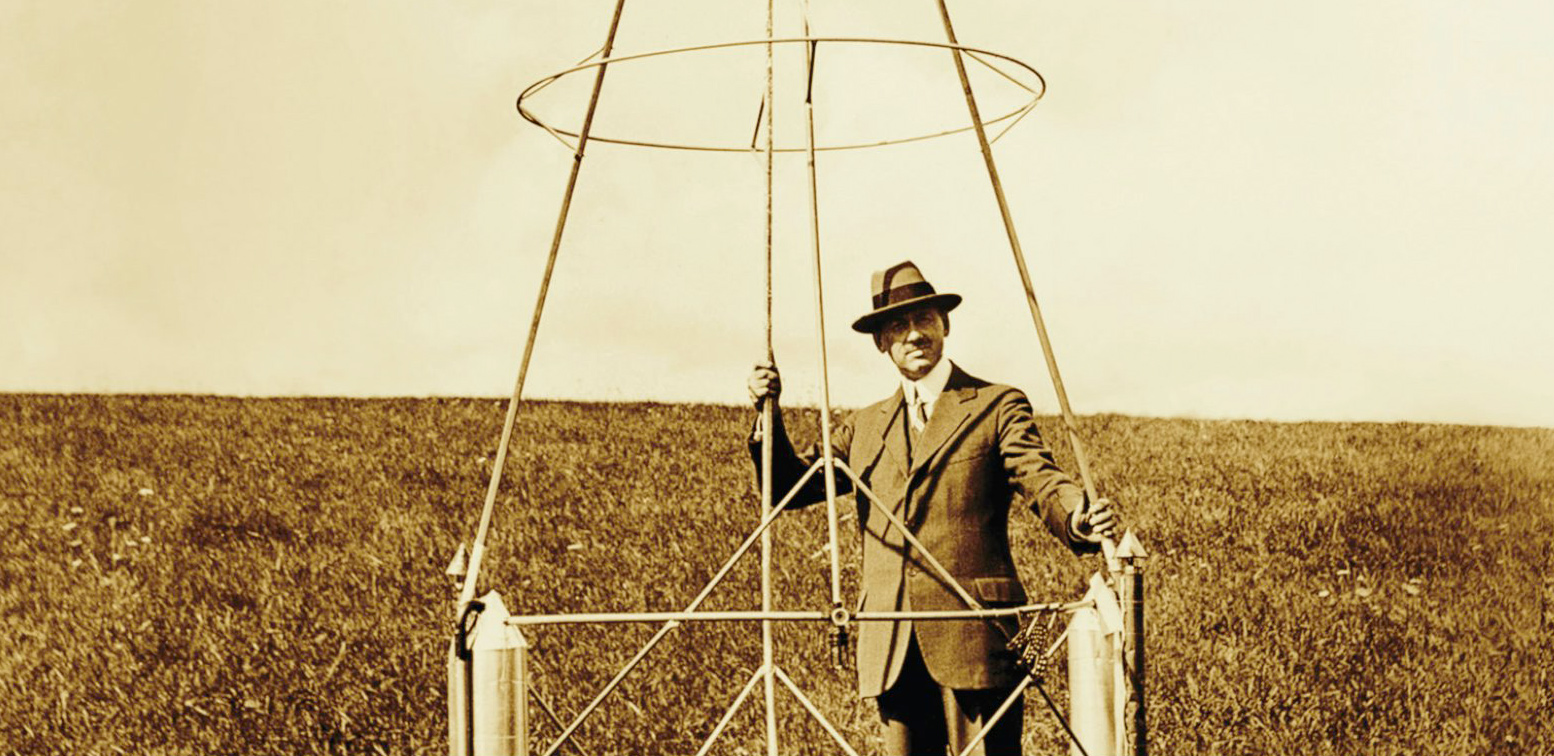
It’s amazing that, when thinking of “great” men of history, e.g., Lindbergh, Edison, the Wright brothers, possibly Tesla, the name Robert Goddard often doesn’t seem to stand out. And yet, we probably wouldn’t have the lifestyles we have now, or possibly would have had to wait a lot longer, if it weren’t for the work performed by Goddard in 1926.
Robert Goddard spent much of his life in Worcester, Massachusetts. A very inquisitive child, he always seemed to his teachers as way above his peers. And yet, he was often sidelined by tuberculosis, which caused him to be held back in high school (although he graduated top of his class), and prevented him from obtaining tenure at Princeton.
But, it’s the work he did in determining the use of liquid fueled rockets that he is best known for, and his name should be a “household word.” It is hoped this book can help that along.
Arcadia Publishing has a wonderful format: Its books are rather short, and are normally filled with relevant photographs. And, Robert Goddard’s Massachusetts is a great example. In this, the authors take the reader from Goddard’s childhood to the incredible scientist and engineer he was. From his “epiphany” that sealed his future while in the family cherry tree, to his love of science fiction – especially such greats as H.G. Wells – spurred him on to realize his dream of launching rockets on his Aunt Effie’s farm.
An important point the authors added was the work of Goddard’s wife, Esther. Without her dedication in photographing and filming all his launches, plus documenting and transcribing his daily notes, Goddard perhaps could have been even less of a known mechanical genius. Outliving Goddard by decades, Esther continued to bring his name to light whenever possible, including being staunch in her making sure all his hundreds of patents were not infringed upon, including by NASA. Again, the authors place her with him in all aspects of his fame.
For anyone wishing to understand the true beginning of the “space age,” Robert Goddard’s Massachusetts is a wonderful read. It may be rather short, but it contains everything you need to realize and understand of this man who deserves to be remembered for all he did for us, today, and in the future.


