

Radio Astronomy Update: Observing the Milky Way
February 2026 :
Now that I have most of the bugs works out, here are the results of 1 month's of data. Enjoy reading
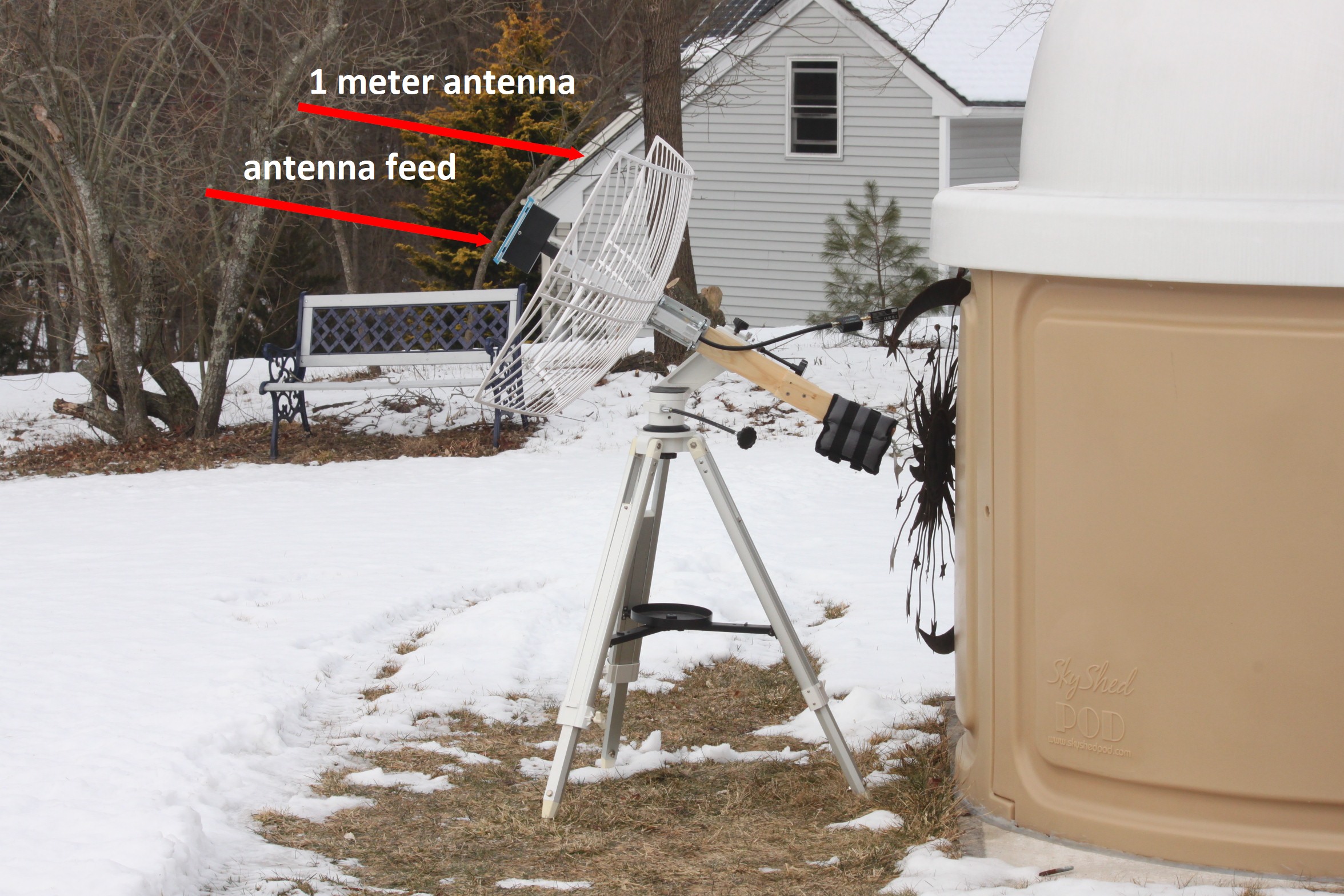
Below is a photo of the scope. A 1-meter radio telescope is considered small. It is common for advanced amateurs to have a 2-meter or 3-meter scope (10 feet in diameter). At the end of the coaxial cable is a low-noise amplifier, filter, and software-defined-radio, which allows connection to a mini PC inside the dome.
My data started by pointing the telescope at 30º above the horizon and along our meridian.
It was necessary to record data for 5 hours by letting the Milky Way drift across the center of the radio telescope. Stellarium software was very helpful in identifying where the Milky Way would be. The next day, I would move the scope up 5º and record for another 5 hours.
Each day's worth of data was only 5 megabytes.
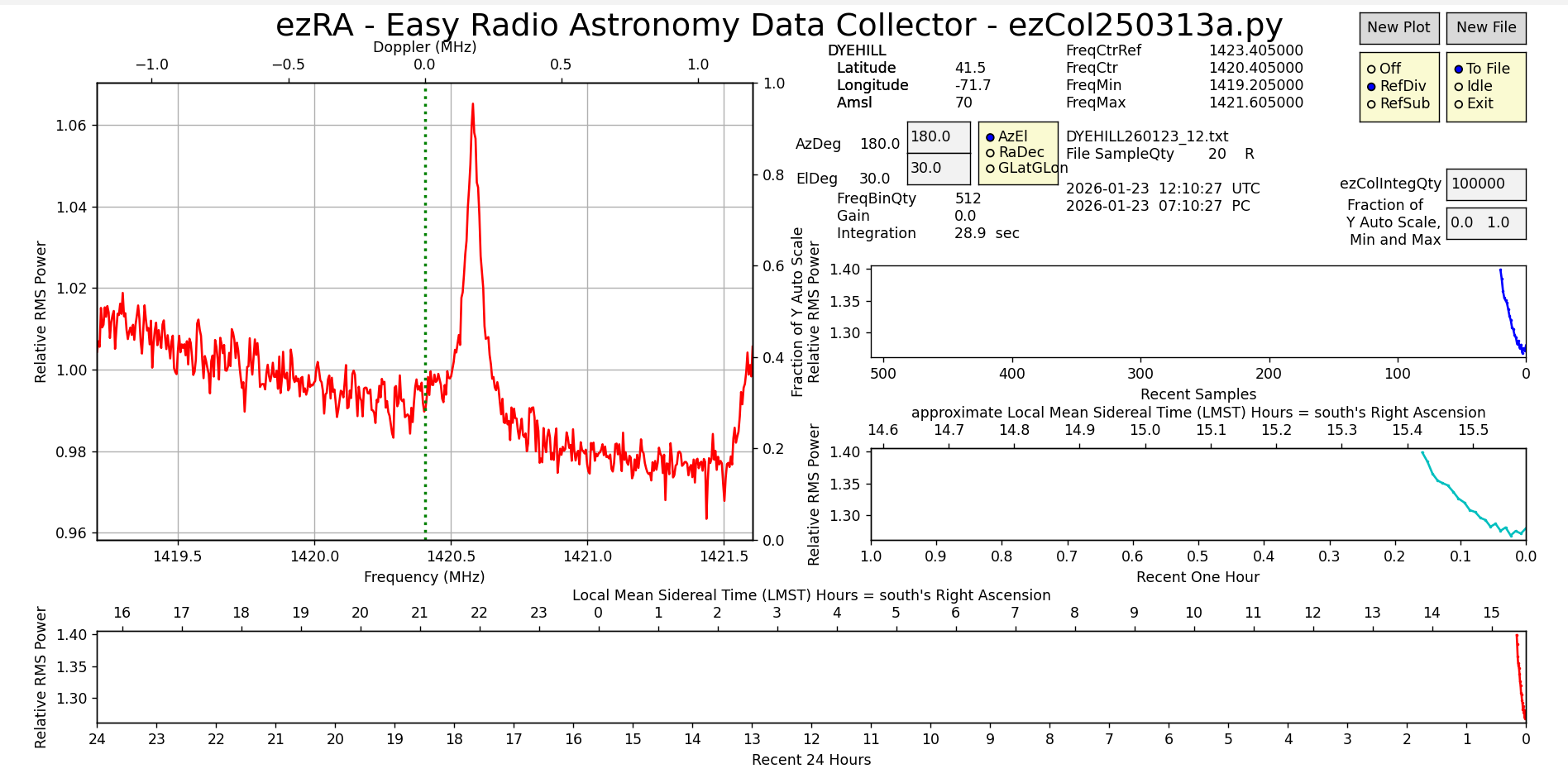
Below is a photo of the PC screen. There is lots of free software to record the data. I use one called ezRA. You can see a peak near the 1420 MHz line. This is the neutral Hydrogen line from Hydrogen in our galaxy.
I have only recorded data from 1 quadrant of our galaxy.
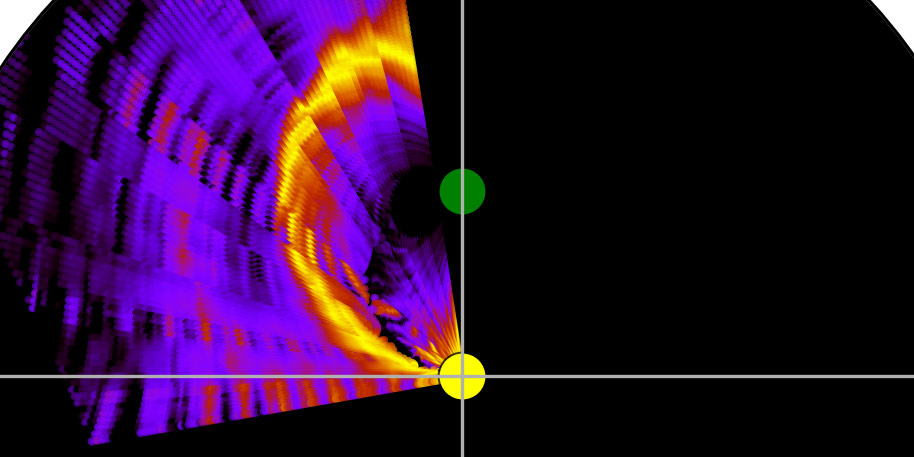
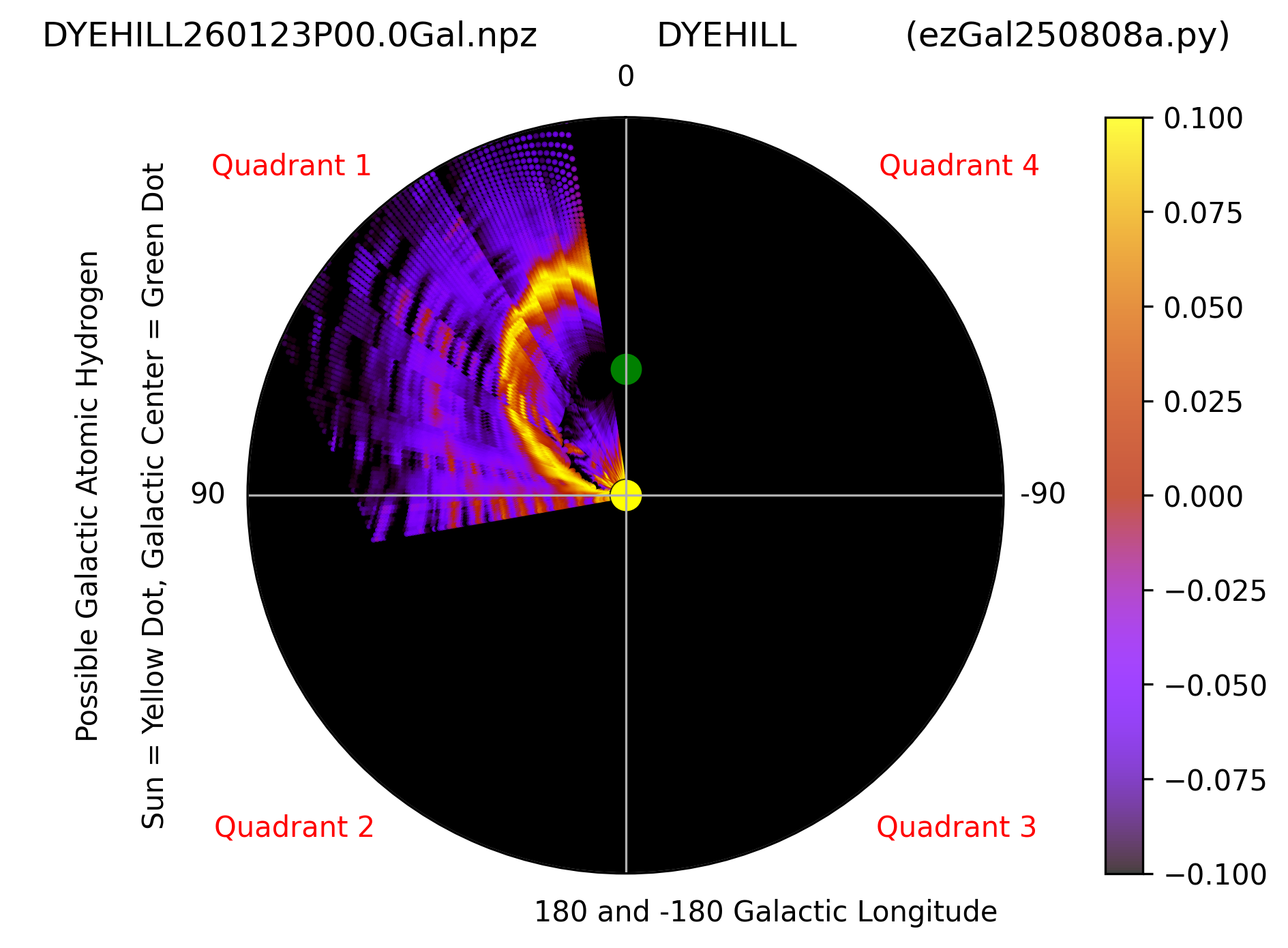
Below is a photo of our galaxy. You can see some of the spiral arm structure in it. The yellow dot in the center is our Sun, and the green dot is the center of the Milky Way.
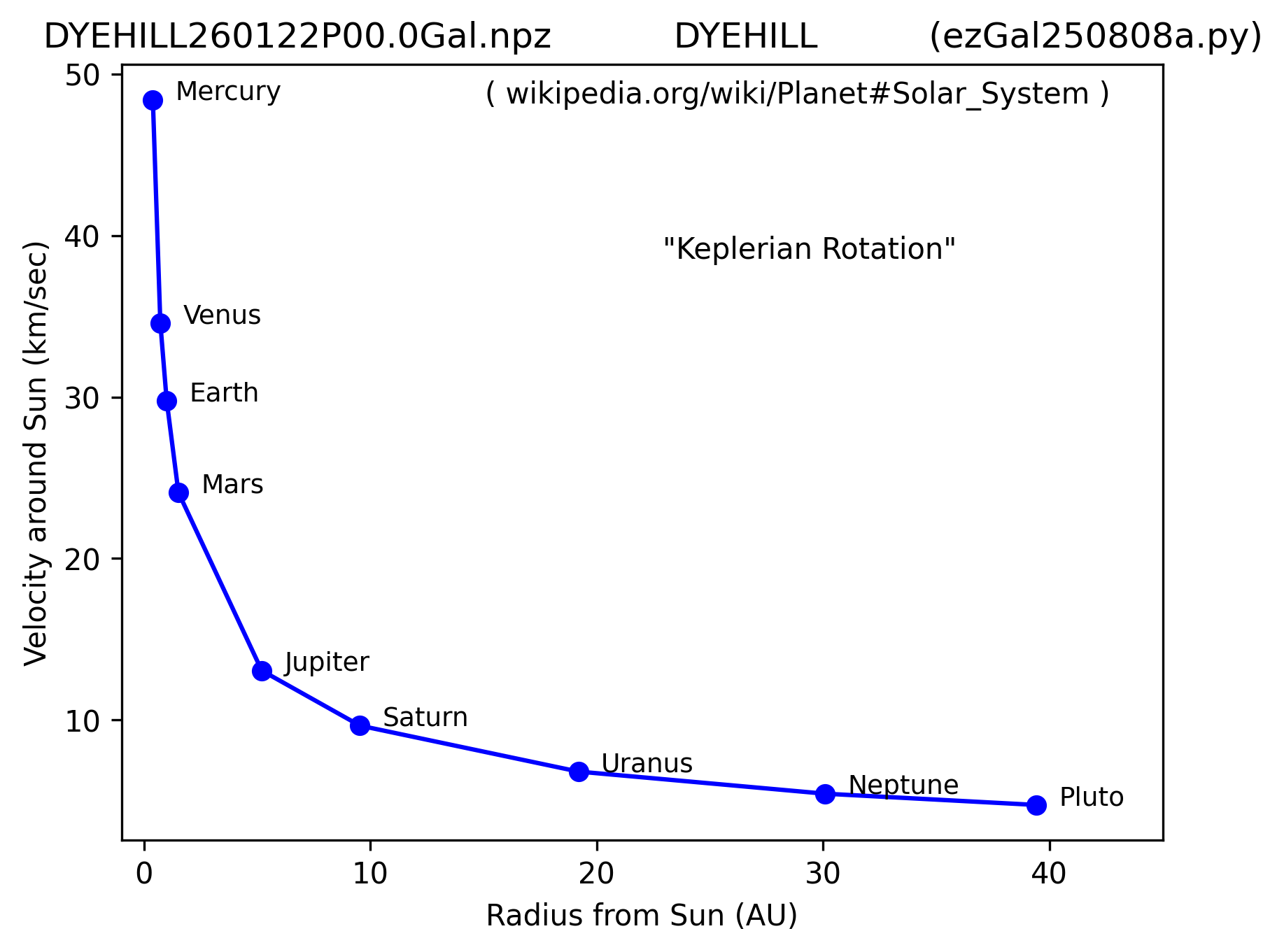
Next is an important graph of our solar system. Notice how the graph slopes downward as move away from the sun. As you move away from the sun, the velocity of the planets decrease.
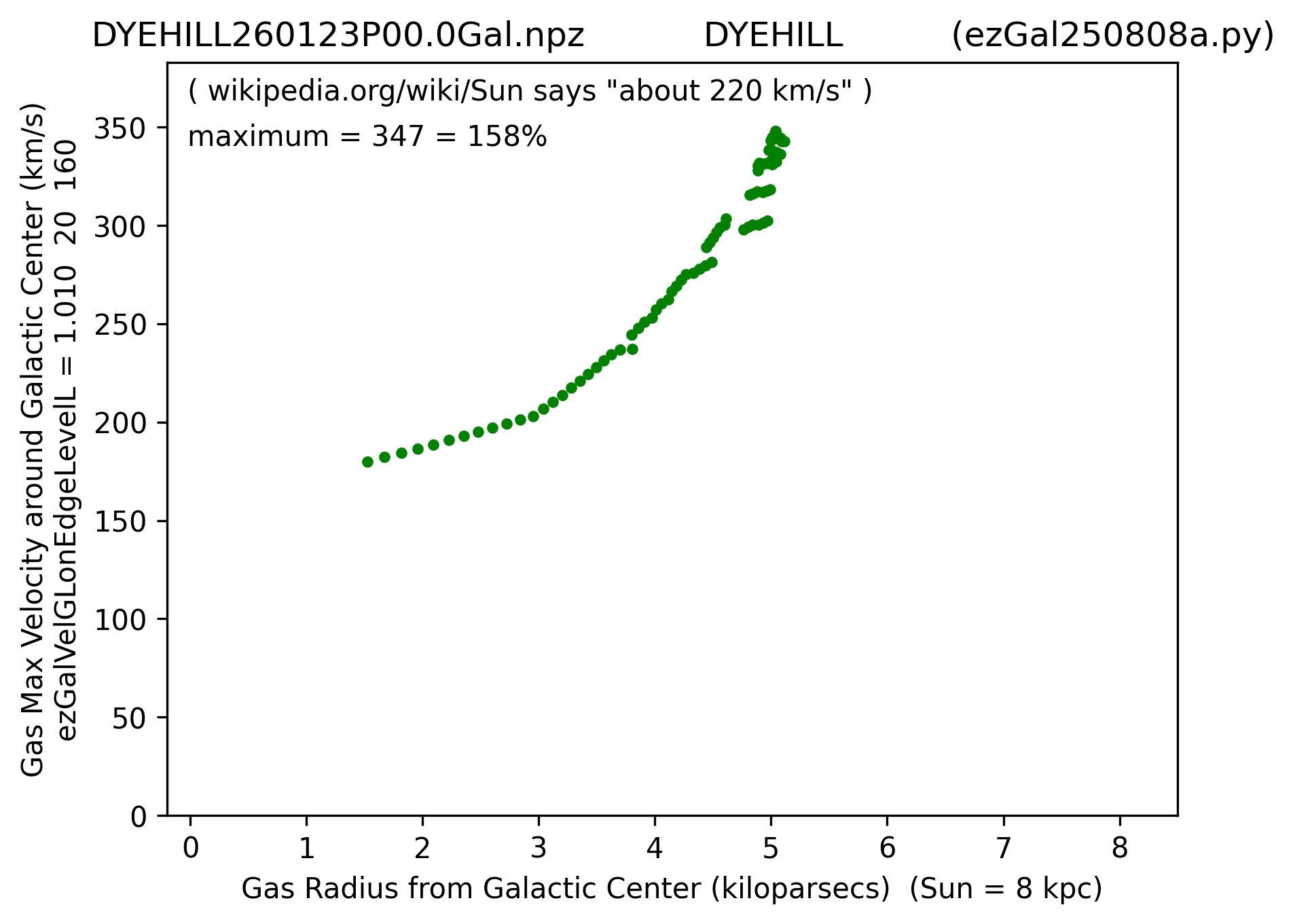
Finally is an very important graph of our galaxy. Notice how the velocity increase as move away from the center.
Why? dark matter!
Related Topics