


The Dung Beetle Problem
May 2026 :
Several years ago, I wrote on the importance of the lowly dung beetle (The Sun, Moon, Stars, and Dung Beetles, May 2016, p. 3), and its apparent ability to travel by means of the sky, just as birds and some butterflies do. By dancing on top of their dung balls, they record the positions of the Sun, Moon and stars, which allow them to travel home after their busy day moving their incredibly large amount of material wherever they need to put it.
Now, sadly, it is being determined that these incredible little insects are being affected by climate change. It appears they can only exist properly in a certain temperature range. By studying the beetle populations, it was found their numbers fell rapidly between 800 and 1600 feet above sea level. Apparently, the higher altitude temperature was ideal for the beetles, while higher temperatures in the lower regions tended to stress them out. As a result, they may be forced to shift to the higher, cooler elevations; however, by doing this, their position of breaking down animal dung, both returning much needed nutrients to the soil, and also removing parasitic breeding sites, which help limit the spread of diseases, would be greatly affected. In addition, their place in the food chain could cause disastrous effects on animals that rely on them for food.
Although these little creatures are ones that use the sky for their individual navigating, we also need to consider them as an indicator of the change in worldly temperature. Although not beautiful, and not an insect we often think about, these beetles are unique in their lifestyles, and consequently their necessity in ours. Their importance in our lives is something we need to think about.
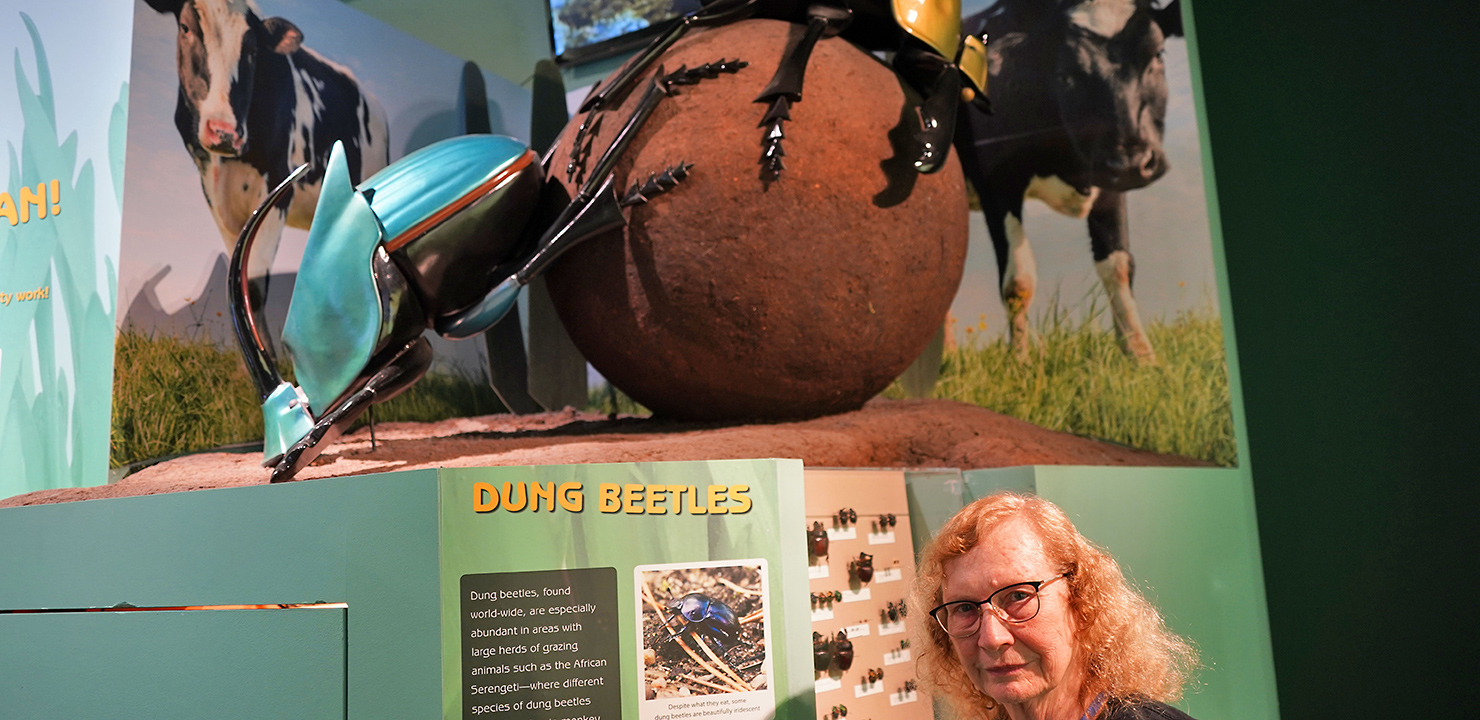
Francine Jackson admires a display showcasing dung beetle display, which includes a larger-than-life diorama, at the Houston Museum of Natural Science during an April 2024 visit.


